SiFive, the RISC-V CPU intellectual-property company founded by Berkeley architects of the open ISA, raised $400 million in a Series G on April 9, 2026, featuring strategic backing from Nvidia and others and positioning the round as its final private funding before an IPO. The financing valued the company at $3.65 billion and closed oversubscribed, with participation from Apollo, D1 Capital, Point72 Turion, T. Rowe Price and existing investors.
The company said the capital will fund advanced R&D on high-performance scalar, vector and matrix CPU cores, accelerator and system IP, plus software ecosystem work to port major platforms and customer enablement engineering. Nvidia’s participation complements SiFive’s integration of NVLink Fusion for tighter GPU-CPU coherence in data center configurations targeting large-scale AI inference.
For hyperscalers and chip integrators, SiFive’s expanded roadmap and ecosystem push make RISC-V a more deployable alternative to proprietary ISAs, enabling customizable CPU IP without per-unit royalties and supporting trend-driven demand for bespoke AI compute stacks.
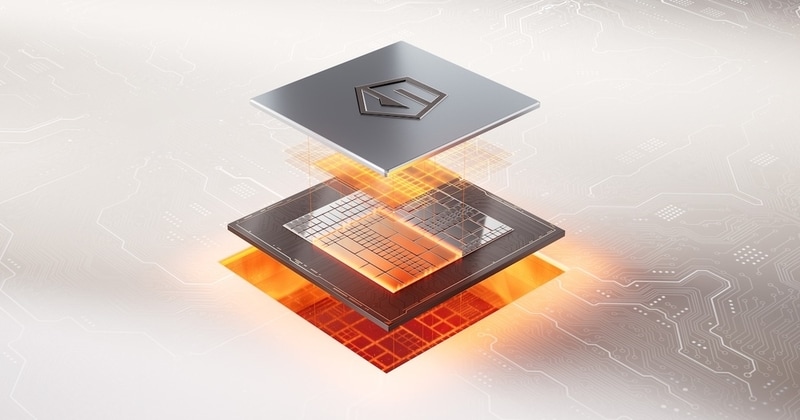
Image Credit: SiFive
Key Themes Behind This Trend
- Open-isa Proliferation
- Wider adoption of open instruction set architectures enables customizable, royalty-free CPU IP that can disrupt legacy ISA licensing and vertically integrated processor ecosystems.
- Heterogeneous Coherent Computing
- Tighter GPU‑CPU coherence via interfaces like NVLink Fusion creates unified memory and low-latency AI inference platforms that blur traditional accelerator-host boundaries.
- Modular AI Compute Stacks
- Demand for configurable scalar, vector and matrix cores alongside accelerator IP supports chiplet-based, composable compute fabrics that challenge monolithic SoC designs.
Where This Applies
- Hyperscale Data Centers
- Major cloud providers can lower costs and optimize workload performance by integrating customizable RISC‑V CPU IP and coherent GPU interconnects into their server architectures.
- Semiconductor IP Vendors
- Established IP suppliers may see market shifts toward services, tooling and differentiated value propositions as open and configurable CPU cores reduce reliance on fixed-license models.
- Chip Integrators and Foundries
- System integrators and foundries are positioned to enable new revenue streams through assembly of chiplet-based, specialized AI compute modules built around flexible RISC‑V cores.