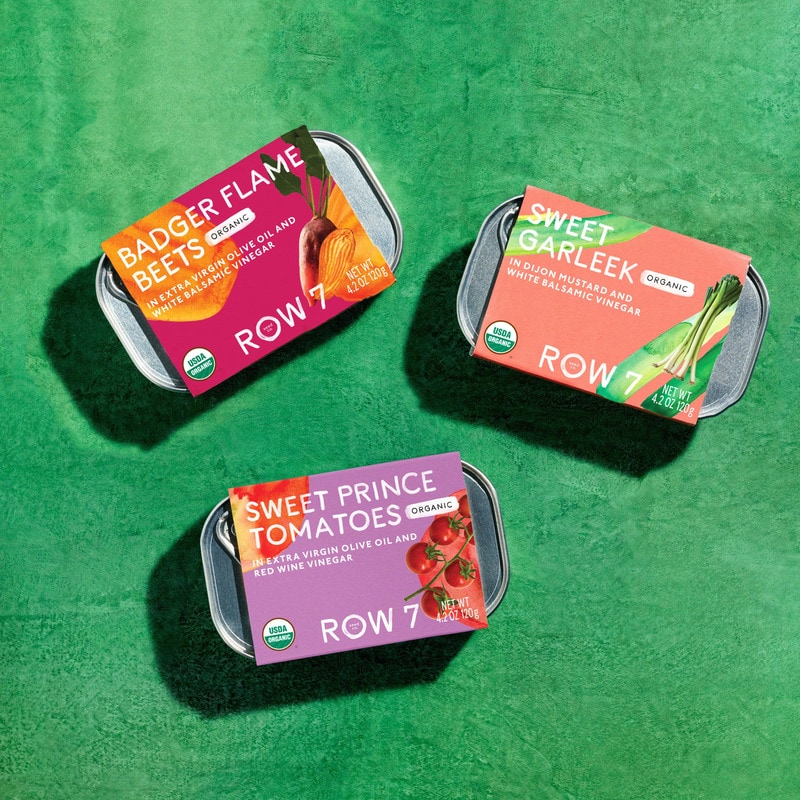
Tinned fish has taken off as seafood brands modernized the humble pantry staple, and Row 7 Seed Co. is bringing the same ease and excitement to shelf-stable tinned vegetables. The brand makes three kinds of tinned veggies: badger flame beets with extra virgin olive oil and white balsamic vinegar, sweet prince tomatoes with extra virgin olive oil and red wine vinegar, and sweet garleek (a garlic-leek hybrid) with white balsamic vinegar and Dijon.
“Most canned vegetables come from varieties bred for yield and logistics," said Dan Barber, founder and chef at Row 7 Seed Co. "Ours come from varieties bred for exceptional flavor, which means they shine fresh and translate beautifully in the tin. When you start with a seed bred for flavor, tinning isn’t a compromise—it’s a way to enhance what’s already there.”
What's Driving This Trend
- Flavor-first Seed Breeding
- Premium culinary seed selection yielding vegetable varieties optimized for taste rather than logistics, enabling preserved products that compete with fresh produce on flavor.
- Shelf-stable Gourmet Vegetables
- High-quality tinned vegetables formulated with chef-driven ingredients and finishing oils, creating pantry items positioned as luxury, convenient alternatives to fresh gourmet produce.
- Artisanal Preserved Pantry
- Small-batch, chef-curated preserved goods combining provenance, craftsmanship, and elevated ingredients, redefining consumer expectations for canned and shelf-stable categories.
Who This Affects Most
- Food Manufacturing
- Production processes and packaging formats adapted to preserve nuanced flavor profiles and premium ingredients, shifting value toward quality-focused canning operations.
- Retail Grocery
- Shelf assortments and premium merchandising that treat tinned vegetables as specialty, high-margin items, altering category placement and pricing strategies.
- Seed Genetics and Breeding
- Plant-breeding programs prioritized for taste and culinary performance rather than yield, influencing upstream varietal choices and downstream product differentiation.