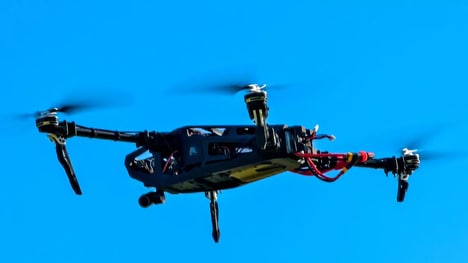
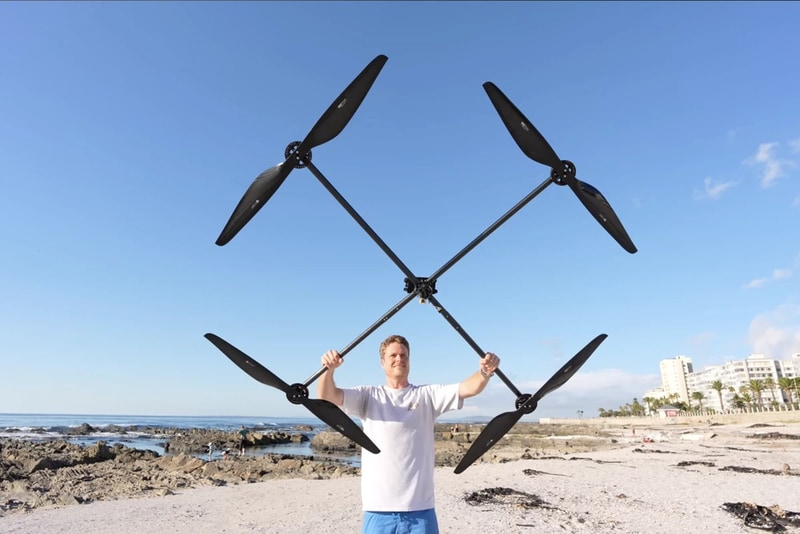
A father-and-son team from South Africa, Luke and Mike Bell, introduced an RC multirotor that prioritized minimal energy use to extend hover time, featuring oversized 40-inch carbon-fiber propellers and semi-solid battery packs. The prototype was documented in a continuous 3 hours, 31 minutes, 6 seconds stationary flight, an unofficial endurance mark attributed to the low-RPM propellers and optimized lightweight construction.
Engineering choices focused on reducing every watt lost: long 800 mm arms optimized via CFD to cut prop interference, a 90 KV T-Motor MN105 V2 Anti-Gravity motor chosen for light weight, and AWG 18 wiring sized to balance resistance and mass. Each Tattu semi-solid cell offered roughly 320 Wh/kg energy density, and lightweight packing shaved hundreds of grams from the aircraft.
For consumers and hobbyists this matters because it demonstrates that system-wide efficiency gains—not just bigger batteries—can produce dramatic endurance improvements, enabling longer inspections, filming or research flights. The build underlines a trend toward component-level optimization and higher-density semi-solid cells for endurance-focused drones.
Image Credit: Luke Bell
Key Themes Behind This Trend
- System-wide Efficiency Optimization
- Performance gains achieved through holistic weight, wiring, and aerodynamics tuning indicate platforms that prioritize integrated efficiency over raw power can dramatically extend endurance.
- Low-rpm Oversized Propulsion
- The use of large, low-RPM carbon-fiber propellers suggests propulsion designs that trade rotational speed for disk efficiency and reduced power draw can unlock longer hover times and quieter operation.
- Semi-solid High-energy-density Cells
- Adoption of semi-solid battery chemistry with ~320 Wh/kg energy density points to powertrains that combine higher gravimetric energy and lighter packaging for sustained flight durations.
Where This Applies
- Commercial Drone Inspection
- Extended endurance platforms reshape inspection workflows by enabling longer continuous surveys of infrastructure, pipelines, and remote sites without frequent battery swaps.
- Aerial Cinematography and Filmmaking
- Longer hover capability and lower-noise propulsion could transform shoot logistics by supporting extended stationary takes and reduced on-set disturbance for sensitive scenes.
- Battery Manufacturing for Aviation
- The move toward semi-solid cells indicates opportunities for specialized manufacturers to supply higher energy-density, lighter-format modules tailored to aviation durability and form factors.