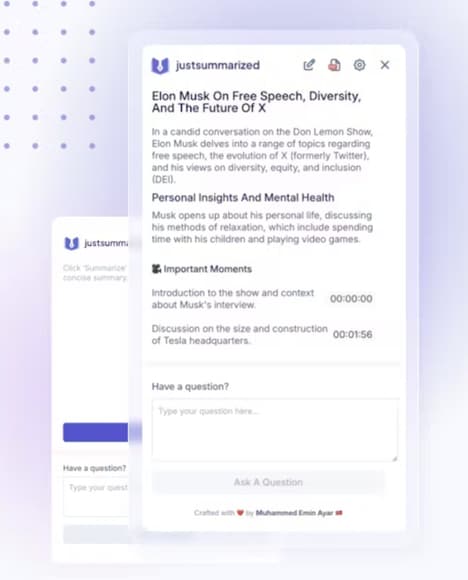
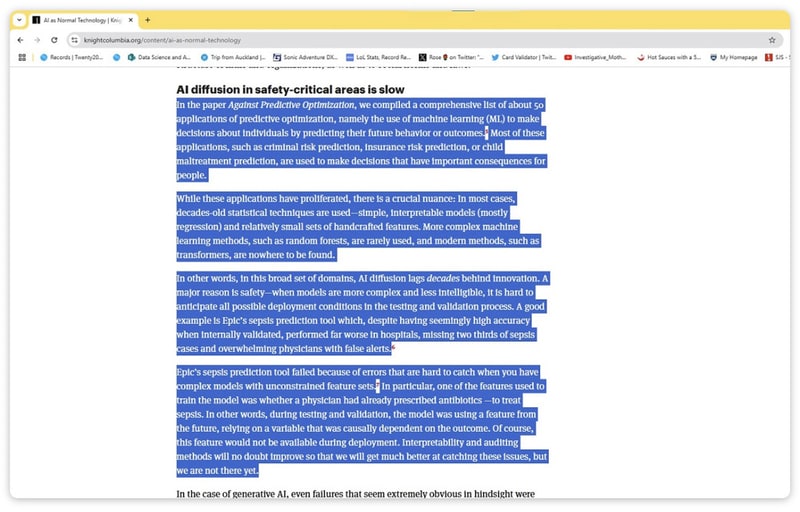
Semantic Zoom is a Chrome extension designed to provide progressive, in-place summarization of web content. It operates by allowing users to condense text directly within a webpage, reducing information density while preserving contextual meaning.
The tool is described as lightweight and responsive, aiming to minimize performance impact during use. It leverages external AI models, specifically Gemini 2.5 Flash, under a bring-your-own-key (BYOK) approach, meaning users supply their own API access. This setup enables flexible usage while distributing model dependency to the user level. The extension is typically used for reading efficiency, research, and information filtering, particularly in environments with dense or lengthy content. It reflects a broader trend in browser-based AI tools that integrate summarization directly into the reading experience. Its primary function is to support faster comprehension by progressively reducing textual complexity within the page itself.
Image Credit: Semantic Zoom
What's Driving This Trend
- In-page Progressive Summarization
- Progressive condensation of text directly within webpages enables layered comprehension models that could redefine how users navigate and retain long-form digital content.
- Bring-your-own-key AI Extensions
- User-supplied API credentials for external models create decentralized trust and pricing structures that could shift vendor relationships and data governance in browser tooling.
- Lightweight Semantic Edge Processing
- Responsive, low-overhead summarization that preserves contextual meaning points to new product designs prioritizing on-device performance and minimal latency for reading workflows.
Who This Affects Most
- Digital Publishing
- Browser-native summarization can reshape article monetization and engagement metrics by enabling tiered content experiences and micro-summary paywalls.
- Enterprise Research and Intelligence
- Incorporation of progressive, in-place summarization into corporate research stacks could transform information synthesis, compliance review, and knowledge transfer practices.
- Educational Technology
- Context-aware, adjustable summarization tools have the potential to personalize reading comprehension aids and assessment scaffolding across diverse learner needs.