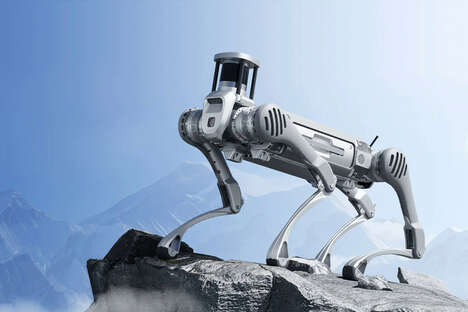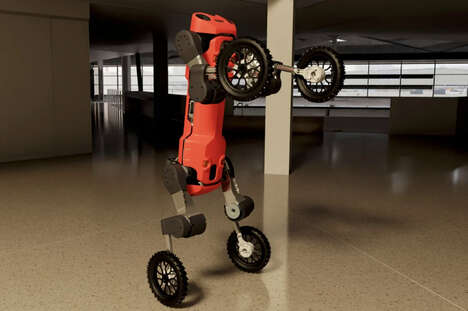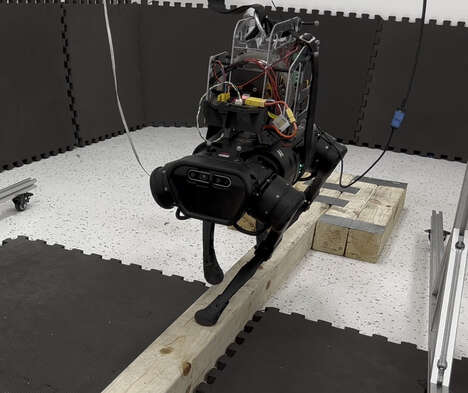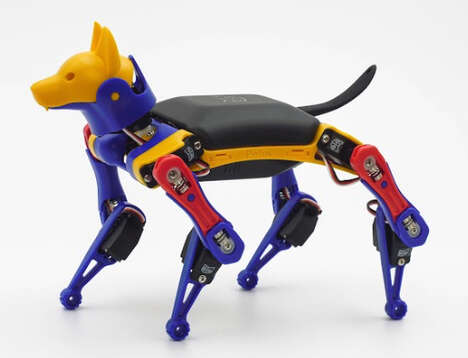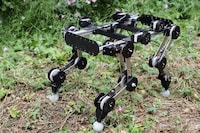
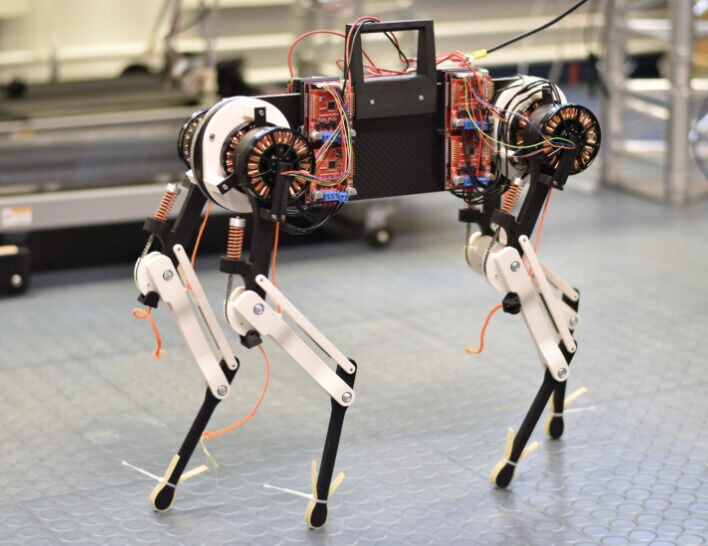
A robotic four-legged dog is aiding researchers at the Max Planck Institute in better understanding how animals learn to walk in the wild. The researchers built this robotic dog and called it Morti.
Felix Ruppert, a student from the German institution where this research is happening shared that "the general concept behind Morti is to model blueprints we find in biomechanics and neurocontrol in animals and transfer them to a robotic platform." The robotic four-legged dog will use these as an algorithm to learn how to walk from scratch.
The goal of this project is to emphasize the beneficial relationship that can be established between robotics and biology, as well as to consider learning in both nature and in robotics "from a different, more intrinsic perspective."
Image Credit: Felix Ruppert/Dynamic Locomotion Group
Key Themes Behind This Trend
- Robotic Animals
- The development of robotic animals to mimic animal behavior and explore new possibilities for robotics and biology.
- Biomechanics Modeling
- The integration of biomechanics modeling into the creation of robotic animals to achieve more natural and realistic movement.
- Interdisciplinary Collaboration
- The trend of interdisciplinary collaboration between robotics and biology to better understand the relationship between the two fields and create new innovations.
Where This Applies
- Robotics Industry
- The robotics industry can benefit from the development of more realistic and specialized robotic animals based on innovative biomechanics modeling.
- Biotech Industry
- The biotech industry can explore new possibilities for biomimicry and the development of new therapies by collaborating with the robotics industry on the development of robotic animals.
- Education Industry
- The education industry can use robotic animals as teaching tools in fields such as biology and robotics to better understand the relationship between the two fields and inspire new innovations.