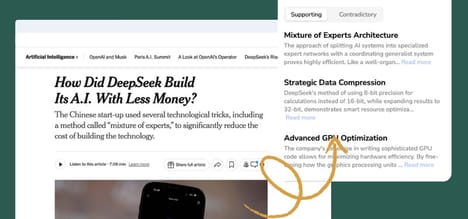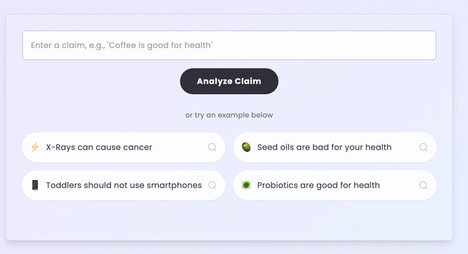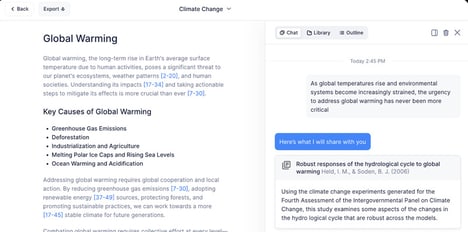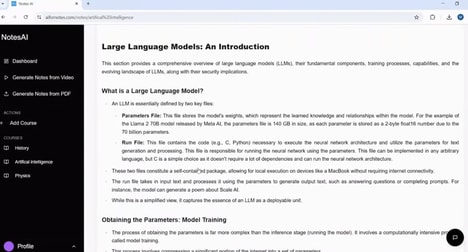
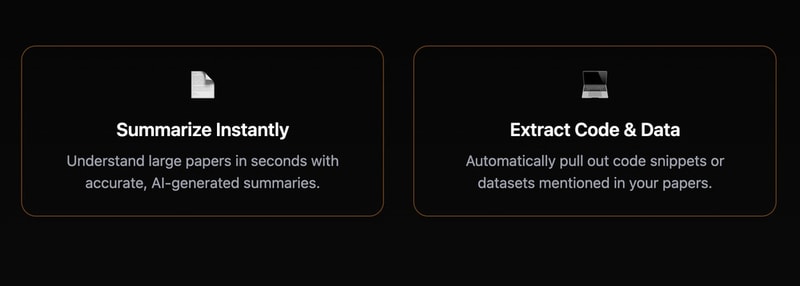
Research Ai operates within the academic intelligence and research productivity space, focusing on transforming complex scholarly papers into structured, digestible insights. Users upload academic documents, and the system automatically summarises content, identifies key arguments, extracts essential data points, and organises references into a clear format.
This allows researchers to move through large volumes of literature without manually reading each paper in full. The platform supports exploration of research themes by highlighting relationships between studies and surfacing core findings quickly. It functions as an all-in-one research companion where analysis, summarisation, and reference management occur in a single environment. By converting dense academic material into structured insights, Research Ai helps streamline literature reviews and knowledge discovery. It supports students, academics, and professionals who work with extensive research material and need efficient ways to interpret, compare, and organise scholarly information.
Image Credit: Research Ai
Why This Trend Is Growing
- Automated Literature Summarization
- Platforms that condense lengthy papers into concise, structured abstracts enable rapid triage of vast literature collections and reduce time-to-insight for research teams.
- Cross-study Insight Extraction
- The emergence of systems that identify relationships and conflicting findings across papers creates possibilities for automated meta-analyses and hypothesis generation from aggregated evidence.
- Integrated Reference and Data Structuring
- New tools that organize citations, datasets, and key arguments into interoperable formats support seamless knowledge transfer between projects and reproducible research workflows.
Industries Being Reshaped
- Academic Publishing
- Publishers could leverage AI summarization to create enhanced article formats and discovery layers that change how peer review, indexing, and reader engagement are structured.
- Pharmaceutical Research
- Drug discovery teams stand to benefit from accelerated literature synthesis that surfaces overlooked mechanisms, biomarkers, and trial results relevant to target validation.
- Higher Education
- Universities and educators may be reshaped by tutoring and curriculum tools that transform dense scholarly content into teachable modules and assessment-ready summaries.