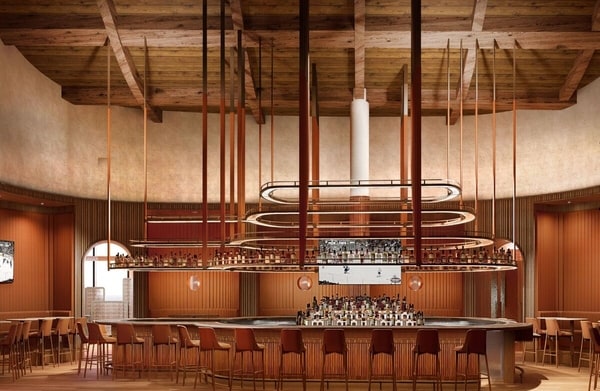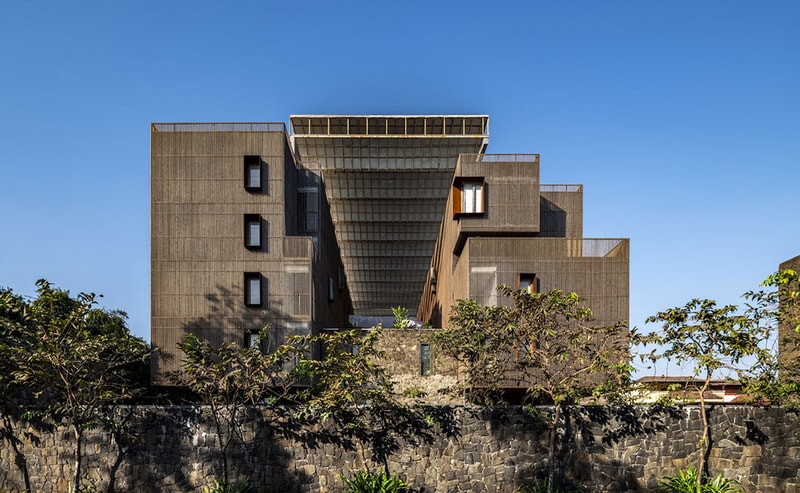
The Radisson Resort and Spa Lonavala is a hospitality project designed by Mumbai-based studio Malik Architecture in the hill station region of Lonavala, India. Located within the Sahyadri mountain range, the resort was conceived as a response to rapid development that has reshaped the area’s natural landscape. The architecture draws directly from local materials such as black basalt and wood while using massing and open spaces to maintain visual and physical connections to the surrounding hills.
The complex incorporates architectural elements common to the region, including courtyards, verandahs, thick masonry walls, and deep shading devices designed to improve ventilation and thermal comfort. Guest room volumes are elevated above the ground and wrapped with permeable louvered walls that filter sunlight while maintaining views of the landscape. Split-level circulation paths and stepped courtyards organize the site and echo traditional Indian water structures known as kunds, creating shaded outdoor areas that connect interior spaces with the surrounding terrain.
Image Credit: Radisson Resort
What Makes This Trend Stand Out
- Local Material Revival
- A renewed emphasis on regionally sourced basalt and timber presents opportunities for new supply chains and vernacular-inspired prefabrication systems that reduce transport emissions and celebrate place-specific aesthetics.
- Bioclimatic Design Integration
- Growing adoption of passive cooling strategies such as deep shading, cross-ventilation and elevated volumes indicates potential for performance-driven design toolkits and retrofit solutions tailored to tropical hill stations.
- Landscape-responsive Massing
- Design approaches that prioritize views, stepped courtyards and circulation aligned with topography create openings for modular site-adaptive building systems that minimize grading and preserve natural drainage.
Sectors Adopting This
- Hospitality
- Boutique and resort operators are positioned to differentiate offerings through context-sensitive architecture and nature-integrated guest experiences that appeal to eco-conscious travelers.
- Architecture and Urban Design
- Firms focused on hill-station and peri-urban contexts may leverage hybrid traditional-modern typologies to deliver climate-responsive masterplans and community-informed housing prototypes.
- Sustainable Construction Materials
- Producers of low-carbon masonry, engineered timber and localized prefabricated components could disrupt conventional supply chains by providing certified, site-appropriate alternatives to imported materials.