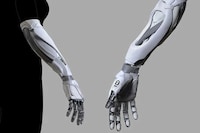
Although there has been progress in prosthetic limb technologies, they could never relay sensory information back to its user. However, a group of researchers at the Cleveland Veterans Affairs Medical Center and Case Western Reserve University’ could potentially revolutionize our view of the future of these artificial limbs.
The new technology features force detectors located on the artificial hand to relay sensory data directly to the nerve bundle in the residual limb. The system can allow the user to feel and touch sensations from up to 20 areas on the prosthetic hand. “The sensation is restored through three electrodes on the peripheral nerves of the residual limb” and users can now perform even the most delicate tasks without losing their grip.
So far, two people in total have been fitted with the system and the results have been super successful.
Key Themes Behind This Trend
- Restorative Prosthetic Limbs
- Incorporating technologies that restore sensory feedback in prosthetic limbs.
- Sensory Data Transmission
- Developing systems that allow the transmission of sensory data from artificial limbs to the user's nervous system.
- Enhanced User Experience
- Improving the functionality of prosthetic limbs to provide a more natural and intuitive user experience.
Where This Applies
- Healthcare
- Exploring the application of restorative prosthetic limbs in the healthcare industry to enhance patient mobility and quality of life.
- Biotechnology
- Developing innovative solutions in biotechnology to advance the field of prosthetic limbs and sensory feedback technology.
- Engineering
- Leveraging engineering expertise to design and optimize the performance of restorative prosthetic limbs and sensory data transmission systems.