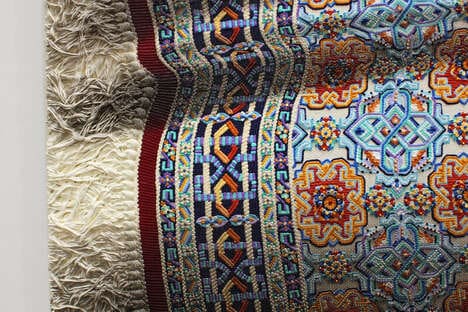
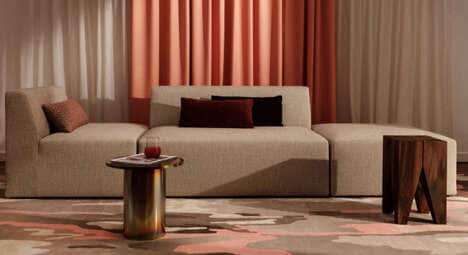
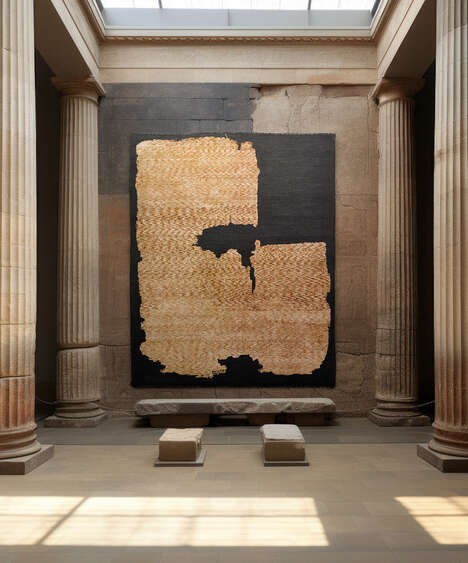
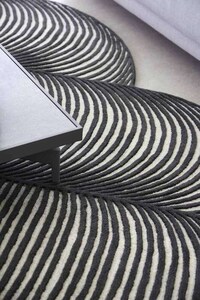
The Persian rug patterns have proven to be quite popular in the world of interior design, however, Kourosh Asgar-Irani seeks to quite literally distort their traditional perception.
The Vienna-based architect employed 3D computer software in order to "produce adaptive rugs designed with parametrically determined patterns." The 'Rugture' collection is built on "traditional nomadic designs from Persia, Anatolia, Armenia, Turkey, and southern Russia." For the project, Kourosh Asgar-Irani utilizes parameters and generative design methods in a way that is revolutionary for the rug industry. The distorted Persian rug patterns are intended to respond to the layout of the room. That is, the designer "imputed parameters relating to the position of doors, windows, and furniture [tp] cause the patterns to shift and result in a change in the density and coloring."
Image Credit: Dezeen
Key Themes Behind This Trend
- Adaptive Rug Designs
- Kourosh Asgar-Irani is pioneering the use of parametrically determined patterns to produce rugs that respond to their surroundings, creating opportunities for other designers to follow suit.
- Generative Design Methods
- Asgar-Irani's use of generative design is revolutionizing the rug industry by enabling the creation of patterns that shift and change in response to a room's layout, opening up opportunities for other designers to apply these methods to other industries.
- Digitally Altered Design
- The use of 3D computer software to digitally alter traditional rug patterns is disrupting the rug industry and creating new design opportunities for other industries, such as fashion and home decor.
Where This Applies
- Rug Manufacturing
- The rug industry can benefit from incorporating Asgar-Irani's generative design and adaptive pattern concepts to create customizable rugs that respond to a room's layout and user preferences.
- Interior Design
- As distorted Persian rug patterns gain popularity in the world of interior design, designers can explore ways to incorporate digitally altered patterns that respond to a room's layout.
- Fashion and Home Decor
- The use of digitally altered and generatively designed patterns in rug-making can inspire designers in the fashion and home decor industries to experiment with similar techniques and create unique products that respond to consumer preferences.