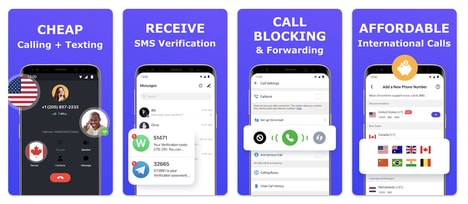
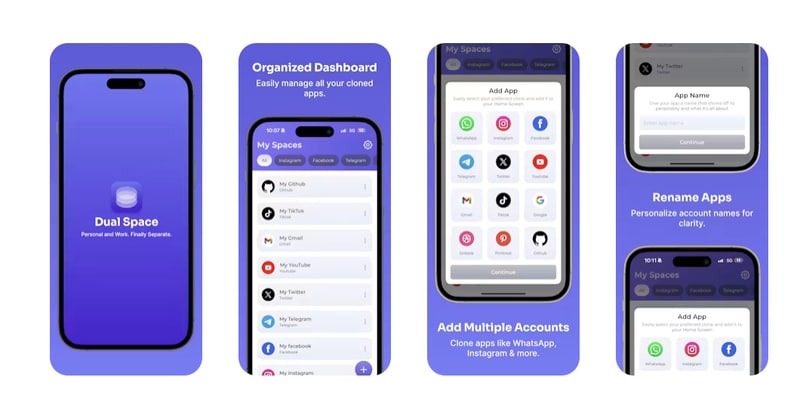
Parallel Account is built for people who don’t want to constantly log in and out just to switch between identities. It lets you clone apps like WhatsApp, Instagram, and others so multiple accounts can run side by side on the same iPhone.
It’s especially useful when the lines between work and personal life blur — one space for clients, another for friends; one profile for creation, another for browsing. Everything stays separated but accessible without friction.
The experience is designed to be lightweight, so switching accounts feels instant rather than like a system workaround. Each account behaves independently, keeping notifications, sessions, and activity streams distinct. It quietly solves a very modern problem: we all live multiple digital lives now, and this just stops them from colliding at the wrong time.
Image Credit: Parallel Account
Key Themes Behind This Trend
- Multi-identity Apps
- Consumers increasingly manage separate personal, professional, creator, and anonymous profiles, creating space for platforms that make parallel digital identities feel native rather than improvised.
- Frictionless Account Switching
- Instant movement between sessions reduces the productivity drag of logging in and out, highlighting demand for lightweight tools that preserve context across duplicated app environments.
- Compartmentalized Notifications
- Distinct alerts, feeds, and activity histories support healthier boundary management, opening room for software that separates attention streams without requiring additional devices.
Where This Applies
- Mobile Productivity
- Workflows centered on messaging, social media, and client communication benefit from device-level account separation that keeps task contexts organized within a single smartphone.
- Social Media Management
- Creators, agencies, and small businesses rely on multiple profiles, making cloned-app experiences a practical layer for managing audience engagement without cross-account confusion.
- Digital Wellness
- Personal boundary tools are evolving beyond screen-time limits toward identity-based separation, where social, work, and leisure spaces remain accessible but less likely to collide.