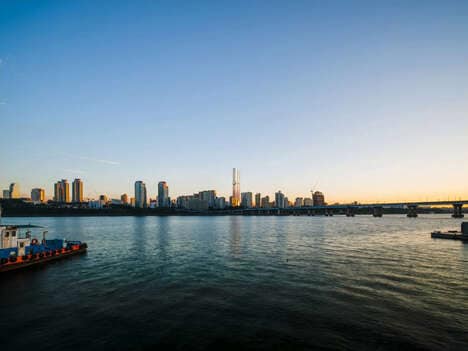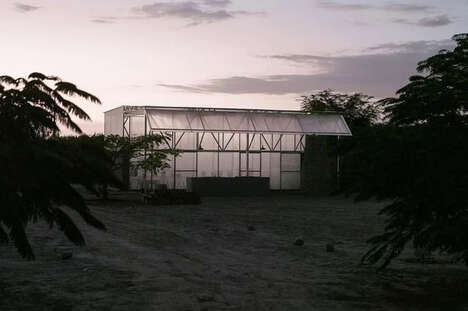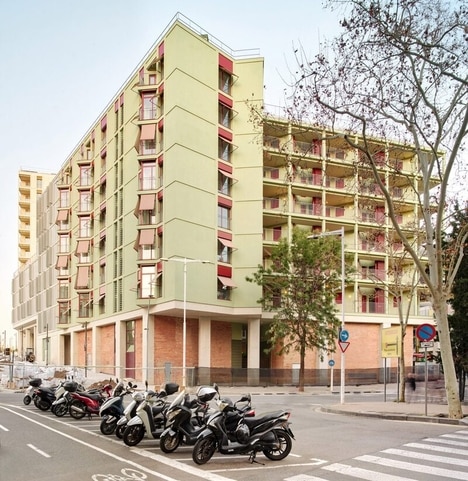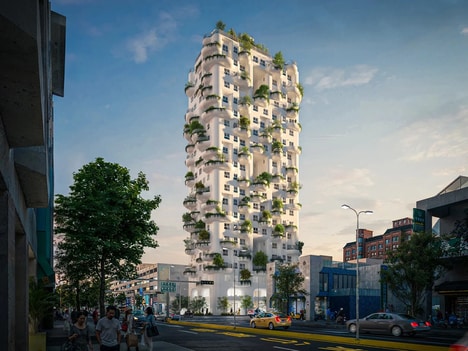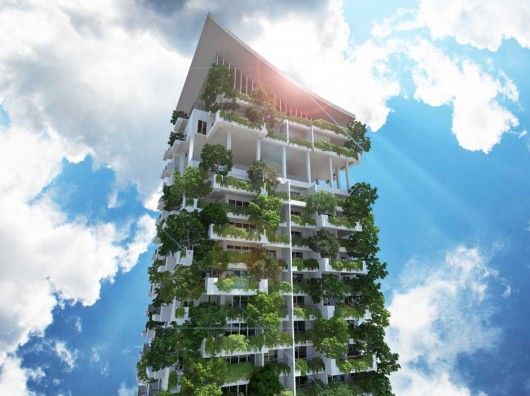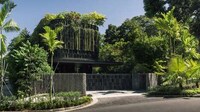
Orchid House is a concept design for eco-friendly and cost-friendly housing structures that would be good for the environment and improve conditions for people living in Taiwanese social housing.
In high-density Taiwanese cities, limited land has meant the construction of tall apartment housing complexes. This results in a lack of vegetation, high humidity and high energy usage rates.
The Orchid House concept borrows from the process of plant photosynthesis: a cyclical process where water and energy is supplied to the entire plant. To achieve a similar result, custom-made photovoltaic panels would sit atop the roof to absorb sunlight. This energy would then be converted to heat using a solar thermal water device, creating a hot water system that flows underneath to radiate warmth from below the floor.
The house would also have a 'Green Core' walled with vegetation to assist with cooling in the summer. An outdoor terrace space includes planting beds integrated into the water system and nourished via drip irrigation.
The Orchid House could generate 987 Gigawatt-hours of energy per year and collect 20,448 tons of rainwater, reducing burdens on sewage systems, keeping the homes cool and watering vegetation.
Key Themes Behind This Trend
- Eco-friendly Social Housing
- Innovations in eco-friendly social housing design, such as the Orchid House, provide a promising opportunity to improve living conditions for low-income residents and reduce harmful impact on the environment.
- Alternative Energy Solutions
- The integration of photovoltaic panels and solar thermal water devices in housing, as seen in the Orchid House, is creating opportunities for renewable energy solutions to be utilized in urban residential settings.
- Sustainable Urban Landscaping
- The implementation of integrated water systems and vegetation walled 'Green Cores' in housing complexes, like that of the Orchid House, present opportunities for sustainable landscaping practices to be employed in urban areas.
Where This Applies
- Real Estate
- Incorporating eco-friendly and sustainable design elements in low-income housing presents an opportunity for real estate developers to not only provide affordable housing, but also reduce environmental impact and attract socially conscious homebuyers and tenants.
- Renewable Energy
- The development and implementation of photovoltaic panels and solar thermal water devices in housing design, as seen in the Orchid House, create opportunities for renewable energy companies to expand into urban residential markets.
- Landscaping and Irrigation
- The use of integrated water systems and vegetation walls in housing design, as demonstrated by the Orchid House, presents an opportunity for landscaping and irrigation companies to incorporate sustainable practices in urban areas.