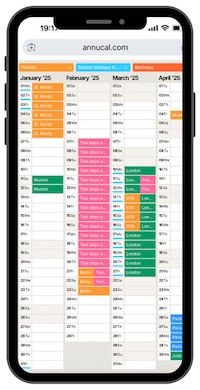
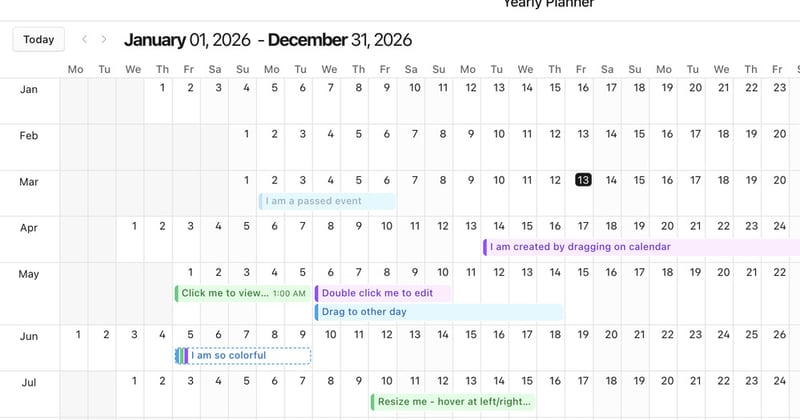
Online Yearly Planner is a digital platform designed to help teams and groups coordinate long-term planning and scheduling. The tool provides a centralized interface where users can map out key projects, deadlines, and events across the entire year, promoting alignment and visibility among team members.
By offering an overview of annual activities, the platform supports strategic planning, resource allocation, and deadline management. From a business perspective, Online Yearly Planner reflects the increasing demand for collaborative planning tools that enhance coordination in remote or distributed teams. By consolidating schedules and milestones into a single platform, the tool aims to reduce miscommunication, streamline workflow management, and improve productivity. Its design emphasizes clarity and accessibility, helping teams maintain cohesion and track progress throughout the year.
Image Credit: Online Yearly Planner
What Makes This Trend Stand Out
- Collaborative Yearly Planning
- Platforms enabling shared annual roadmaps reveal opportunities to disrupt single-user planning by embedding collective decision logic and versioned consensus workflows.
- Centralized Milestone Visibility
- A move toward unified milestone dashboards creates potential for tools that fuse analytics and predictive alerts to preempt resource conflicts across projects.
- Distributed Team Alignment
- Improved alignment for remote teams signals room for innovation in context-rich synchronisation features that preserve institutional memory across time zones.
Sectors Adopting This
- Project Management Software
- Demand for year-spanning coordination opens pathways for PM products to integrate long-term portfolio forecasting with real-time collaboration layers.
- Human Resources and Workforce Planning
- Workforce planners facing annual capacity challenges can benefit from systems that couple skills forecasting with calendar-driven hiring and training pipelines.
- Enterprise Resource Planning
- ERP vendors could be reshaped by calendar-centric modules that align financial, procurement, and operations schedules into a single temporal model.