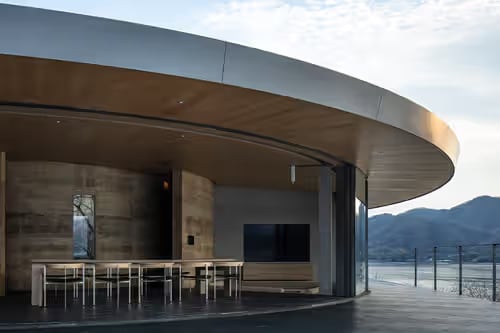
NOT A HOTEL Setouchi is a hospitality project designed by Bjarke Ingels and his firm Bjarke Ingels Group, marking their first completed buildings in Japan. Located on Sagishima Island in Hiroshima Prefecture, the development consists of three villas and a communal restaurant positioned along the coastline. NOT A HOTEL Setouchi integrates architecture directly into the landscape, with each villa named “360,” “270,” and “180” based on panoramic views of the Seto Inland Sea. The project officially began operations in April 2026, accessible by private boat or helicopter.
The design combines traditional Japanese architecture with contemporary construction, using elements such as tatami-based layouts, shoji-inspired glass facades, and rammed earth walls made from local soil. The villas are embedded into the island’s topography, creating a connection between interior and exterior spaces while maintaining privacy. Developed under a fractional ownership model, the property allows owners to access stays across the broader NOT A HOTEL network.
Image Credit: Not A Hotel, Kenta Hasegawa
What Makes This Trend Stand Out
- Fractional Luxury Hospitality
- Shared ownership models for high-end retreats create new revenue ecosystems by blending vacation access with asset appreciation and networked stays.
- Integrated Landscape Architecture
- Buildings that are embedded into topography and oriented around panoramic sightlines reshape guest experiences and blur boundaries between indoors and outdoors.
- Local Material Revival
- The use of rammed earth, tatami-inspired layouts and regionally sourced finishes signals a resurgence of place-based materials that redefine authenticity and sustainability benchmarks.
Sectors Adopting This
- Luxury Travel
- Boutique, transport-accessible island retreats that emphasize exclusivity and design-driven narratives are redefining premium itineraries and guest expectations.
- Real Estate Development
- Fractional ownership combined with branded hospitality platforms introduces hybrid asset classes that shift valuation models and liquidity considerations for premium properties.
- Sustainable Construction
- Adoption of local, low-carbon building techniques and culturally informed design practices is altering procurement, skill sets and lifecycle assessments across projects.