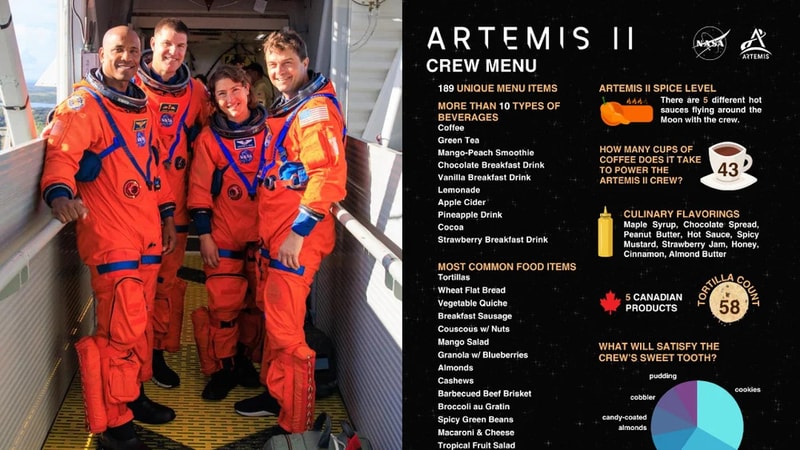
The NASA Artemis II menu outlines a 10-day food system designed for a lunar flyby mission, featuring 189 shelf-stable items selected for nutrition, safety, and ease of use in microgravity. Meals are pre-packaged and either ready-to-eat or require rehydration using onboard water systems, with no refrigeration available. Options include vegetable quiche, couscous with nuts, mango-peach smoothies, and barbecued beef brisket, alongside staples like tortillas that minimize crumbs in zero gravity.
The menu balances performance and comfort, combining structured meals with snacks and flavor enhancers such as hot sauce, nuts, cookies, and chocolate. Beverages range from coffee and tea to lemonade and apple cider, while astronauts select their preferences pre-flight to ensure variety across the mission. Food is grouped into multi-day packs and consumed using compact reheating systems, reflecting constraints of storage, weight, and preparation inside the Orion spacecraft.
Image Credit: NASA
What Makes This Trend Stand Out
- Shelf-stable Gourmet
- Growing demand for high-quality, shelf-stable meals suitable for extended missions highlights potential for culinary innovation that preserves texture and flavor without refrigeration.
- Microgravity Packaging
- Packaging designs that minimize crumbs, control portioning, and enable easy rehydration onboard point to novel material and form-factor developments optimized for zero-gravity environments.
- Personalized Mission Nutrition
- Pre-flight selection of individualized meal plans and flavor enhancers indicates opportunities to tailor nutrition and sensory experiences to crew preferences and mission roles.
Sectors Adopting This
- Space Food Manufacturing
- Specialized production processes and preservation technologies for compact, nutrient-dense items could redefine supply chains for long-duration spaceflights and remote terrestrial applications.
- Food Packaging and Materials
- Advanced barrier films, lightweight structural packaging, and single-use rehydration systems suggest cross-over innovations that address safety, waste reduction, and handling constraints in constrained environments.
- Food Tech and Personalized Nutrition
- Data-driven meal customization platforms and shelf-stable nutrient formulations reveal potential intersections between biotech, flavor science, and user-preference systems for mission-specific diets.