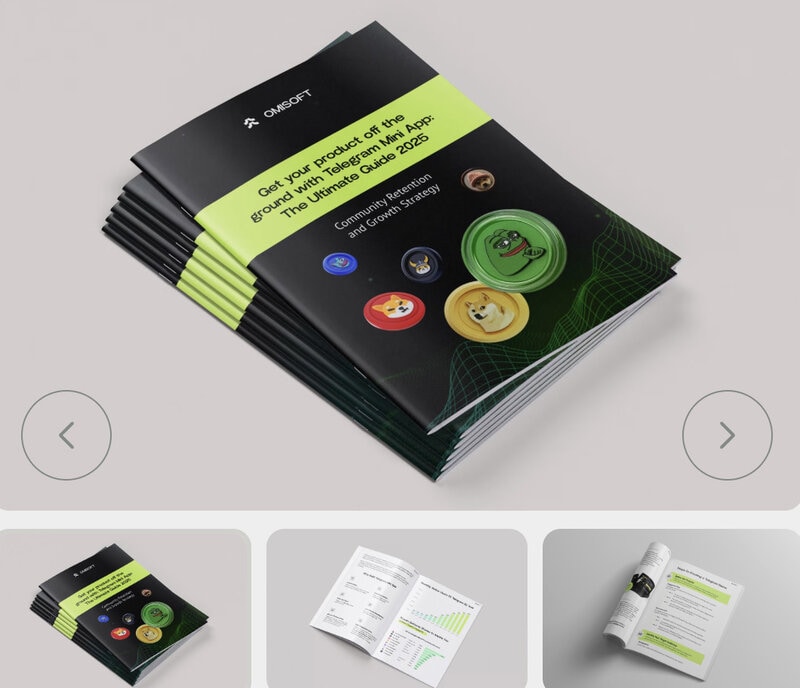
Getting users to download and consistently return to a new app can be one of the biggest challenges for early-stage products. This free guide explores Telegram Mini Apps as an alternative, showing how developers and founders can build products directly within the Telegram ecosystem. It covers real-world examples, user data, retention strategies, and a framework for creating apps designed to encourage repeat engagement.
The guide focuses on practical tactics for moving beyond the traditional MVP approach and building products that users can access without downloading a separate app. It also explores why Telegram’s built-in distribution and existing user base can provide an opportunity for faster adoption. For founders looking to experiment with new products, the guide offers a practical framework for building and scaling inside Telegram.
Image Credit: Mini App Growth
What Makes This Trend Stand Out
- Embedded Mini Apps
- Products built inside high-traffic messaging ecosystems reduce download friction and create new paths for faster user adoption.
- Platform-native Growth
- Telegram’s existing user base and distribution tools highlight how startups can scale engagement without relying on standalone app stores.
- Frictionless Product Testing
- Mini app frameworks make early experimentation more accessible by enabling founders to validate concepts where users already spend time.
Sectors Adopting This
- Mobile Applications
- App developers can rethink retention models through lightweight experiences that live within established communication platforms.
- Social Messaging
- Messaging platforms are evolving into product ecosystems where commerce, services, and utilities can be layered directly into conversations.
- Startup Software
- Early-stage software companies gain alternative launch environments that support rapid iteration, lower acquisition barriers, and repeat engagement.