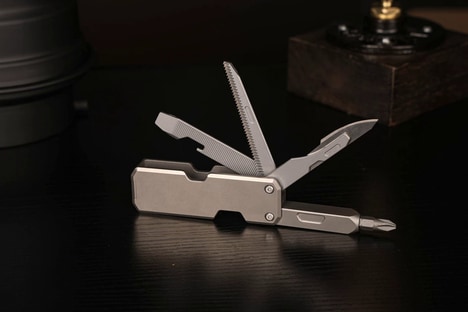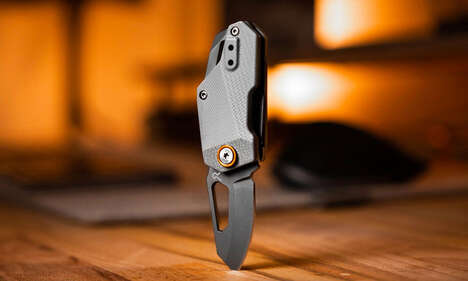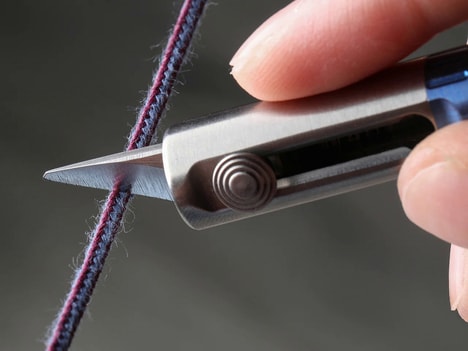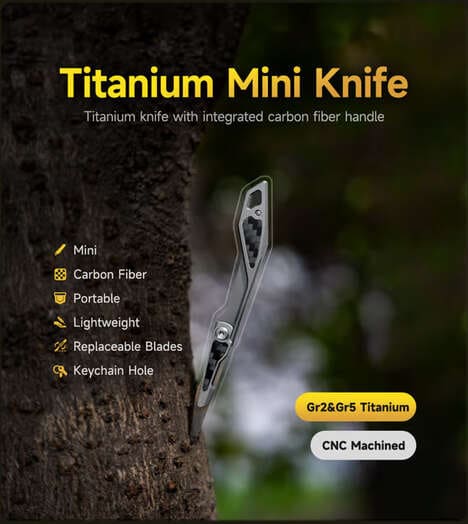
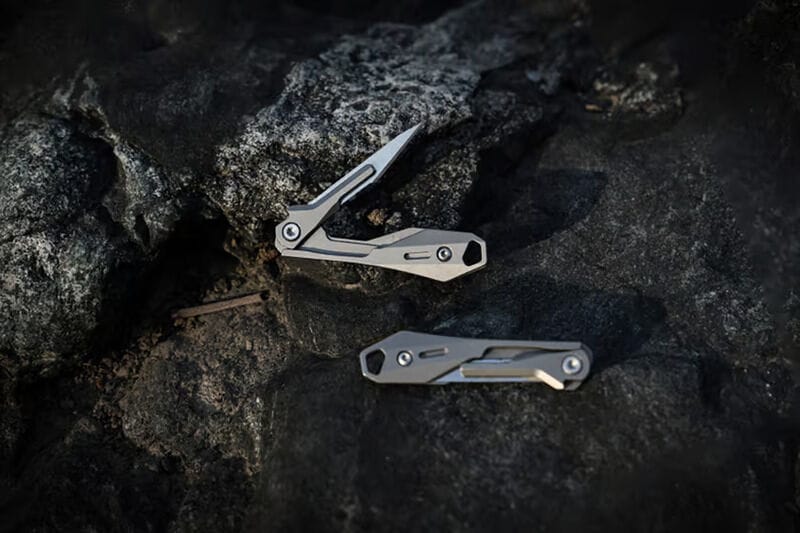
The BladeNex from MIH is a compact, titanium folding scalpel knife designed for everyday carry (EDC). Measuring just 2.42 inches when closed, it is small enough to fit on a keychain or attach to a zipper. The knife is made from durable grade 5 titanium, which is both lightweight and corrosion-resistant. It features a replaceable scalpel-style blade, ensuring a consistently sharp edge, and includes a lock mechanism for safety. The BladeNex also has a slot for a glowing tritium vial, making it easy to locate in low-light conditions.
The BladeNex offers practical versatility with its ergonomic design, which provides a comfortable grip for precise cutting tasks. It comes with a stainless steel clip for secure attachment to clothing or backpacks, and is available in textured sandblasted or PVD black finishes. The Kickstarter campaign for the BladeNex includes various add-ons such as replacement blades, luminous glass or Tritium vials, and a titanium quick-release keychain. Priced at $39, the BladeNex aims to provide a reliable and long-lasting cutting tool for everyday use.
Image Credit: MIH
Why This Trend Is Growing
- Compact Everyday Carry Gear
- The push towards miniaturized designs in everyday carry gear highlights an opportunity for creating multi-functional tools that easily fit on keychains or zippers.
- Titanium Utilization
- The use of grade 5 titanium in small-scale products like EDC knives presents a chance to innovate with durable, lightweight materials in consumer goods.
- Glow-in-the-dark Accessories
- Integrating tritium vials in EDC products opens avenues for new glow-in-the-dark technologies in practical tools.
Industries Being Reshaped
- Outdoor and Tactical Gear
- The outdoor and tactical gear industry can capitalize on demand for compact and robust EDC tools like the BladeNex.
- Material Science and Engineering
- Material science innovations in titanium and tritium utilization provide pathways for developing advanced consumer products.
- Crowdfunding Platforms
- Crowdfunding platforms like Kickstarter remain vital for launching innovative consumer goods, enabling direct-to-consumer market entry strategies.