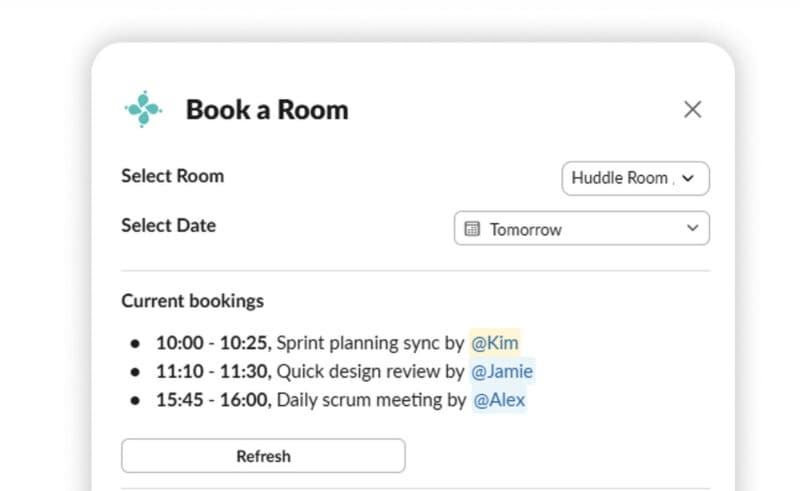
Booking meeting rooms can be surprisingly frustrating when teams have to check availability, switch between calendars, or deal with double bookings. MeetHub brings the process directly into Slack, allowing employees to use a simple /book command to reserve office meeting rooms.
Users can check room schedules, see when spaces are available, and avoid accidentally booking a room that is already in use. The platform also sends 10-minute reminders and makes it easy to reschedule or cancel bookings with just a few clicks. Admins can manage meeting rooms and oversee how spaces are being used across the workplace. By keeping room booking inside Slack, MeetHub makes it easier for teams to organise meetings without leaving the platform they already use for work.
Image Credit: MeetHub
Key Themes Behind This Trend
- Chat-based Workplace Tools
- Embedding operational tasks inside collaboration platforms reduces workflow friction and creates openings for more intuitive employee productivity systems.
- Smart Room Scheduling
- Real-time visibility into shared space availability supports more efficient office usage while enabling smarter workplace management services.
- Automated Meeting Coordination
- Reminder alerts, quick cancellations, and simplified rescheduling highlight the potential for AI-enhanced tools that streamline everyday team logistics.
Where This Applies
- Enterprise Software
- Collaboration-integrated booking features expand the value of workplace platforms by consolidating more administrative functions into daily communication tools.
- Workplace Management
- Data-driven oversight of meeting room usage creates opportunities for facilities teams to optimize space planning and hybrid office operations.
- Human Resources Technology
- Employee experience platforms can benefit from seamless scheduling utilities that remove minor workplace frustrations and improve organizational efficiency.