Adding transactional email functionality to an application can involve configuring email services, managing integrations, and writing additional code. MailBlock is a lightweight email SDK for Node.js designed to simplify this process for developers. The platform allows developers to send transactional emails with just a few lines of code, making it easier to add email functionality to applications without a complex setup.
Built with developers in mind, MailBlock focuses on providing a straightforward way to handle common email-sending requirements. It can be useful for applications that need to send automated messages such as account confirmations, notifications, password resets, or other transactional communications. By reducing the amount of code needed to get started, MailBlock aims to make email integration faster and easier for developers working with Node.js.
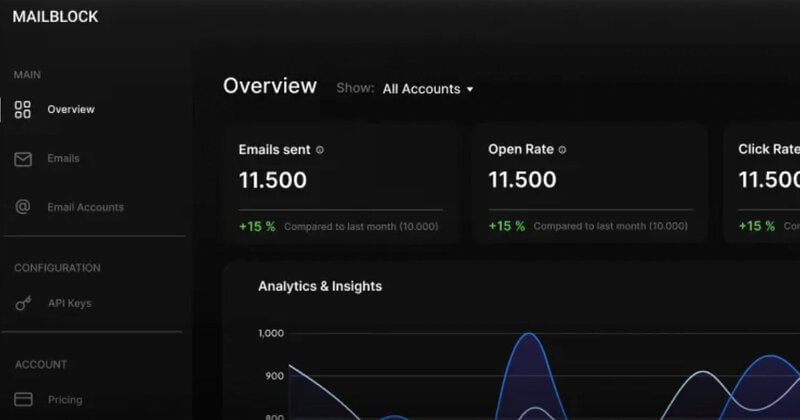
Image Credit: MailBlock
What's Driving This Trend
- Low-code Email Integration
- Simplified SDKs are reshaping application development by reducing backend complexity for transactional messaging features.
- Developer-first Communication Tools
- API-focused platforms create space for streamlined products that prioritize fast setup, clear documentation, and minimal configuration.
- Automated User Messaging
- Transactional notifications are becoming foundational to digital experiences as applications rely on timely, event-triggered communication.
Who This Affects Most
- Software Development
- Lightweight developer tools can accelerate product cycles by making essential infrastructure features easier to embed.
- Email Services
- Specialized transactional email solutions introduce differentiation through simplicity, speed, and framework-specific usability.
- Saas Platforms
- Application-based businesses benefit from embedded communication capabilities that support onboarding, security, and user engagement workflows.