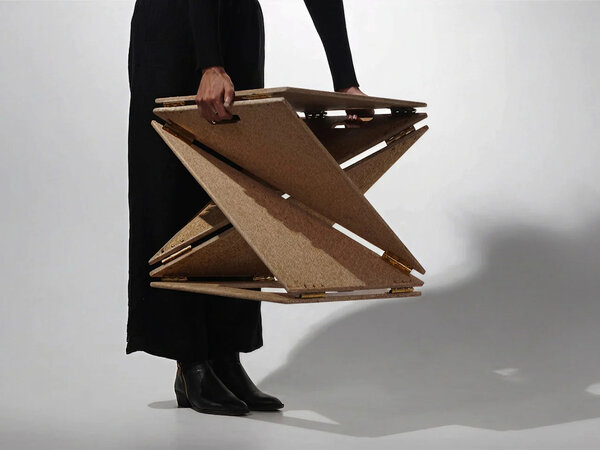
Lost Hide is an exhibition presented as part of Melbourne Design Week 2026 at Abbotsford Convent in Melbourne. Curated by Emma Elizabeth and presented by Local Design, the exhibition brings together Australian designers working with leather and upholstery offcuts, reframing the material as a site for experimentation rather than decoration or traditional craft application. The works include bespoke and limited-edition pieces that reinterpret discarded and surplus leathers supplied by Swiss Design.
The exhibition is structured around material-led practice, with designers developing objects that explore transformation, reuse, and narrative through surface and structure. Leather is treated as a flexible design medium, used across furniture, objects, and sculptural works that blur the boundaries between functional design and artistic expression. It is located at The Store within Abbotsford Convent and runs as part of the wider Melbourne Design Week program, which spans exhibitions, installations, workshops, and talks across the city.
Image Credit: Matthew McQuiggan
What's Driving This Trend
- Circular Material Economies
- Rising emphasis on reclaiming and upcycling leather offcuts creates opportunities for closed-loop supply models that redefine waste as a design resource.
- Material-led Craft Revival
- Material-led practice foregrounds texture and narrative over mass production, opening space for small-batch, high-value craft practices that challenge industrial uniformity.
- Design-art Fusion
- Blurring boundaries between functional objects and sculptural works positions limited-edition leather pieces as hybrid cultural commodities that shift value from utility to story and scarcity.
Who This Affects Most
- Furniture Manufacturing
- Repurposed upholstery leathers enable modular and customizable furniture lines that prioritize unique surface narratives and material provenance over standardized production.
- Apparel and Accessories
- Design houses and independent makers can leverage surplus leather to produce limited-edition garments and accessories that emphasize sustainability narratives and tactile differentiation.
- Material Supply and Logistics
- Surplus leather marketplaces and redistribution services could emerge as intermediaries that catalogue, certify, and route offcuts from large suppliers to niche designers and manufacturers.