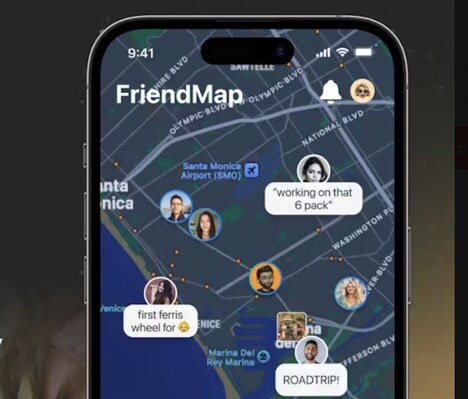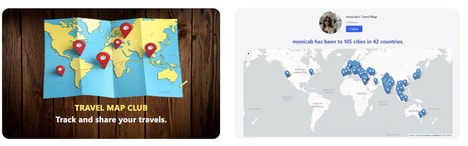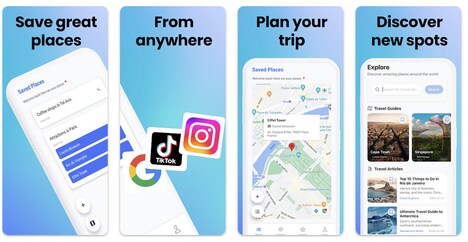
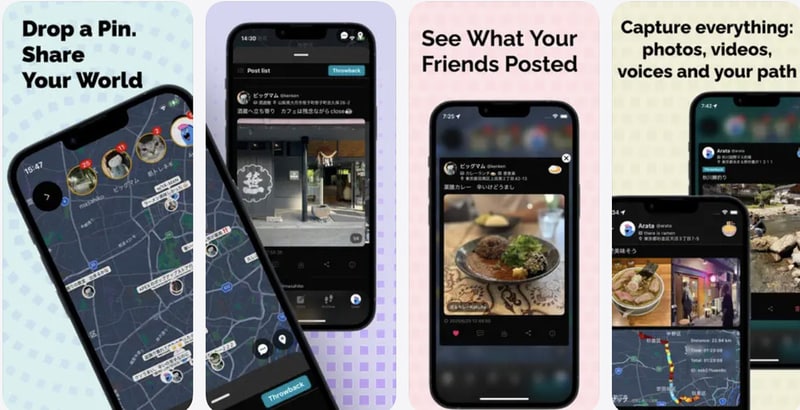
Wander is a map-centric, location memory, social app designed to help users capture and share memories tied to specific real-world locations. It allows individuals to post photos, videos, voice notes, or text entries directly onto a shared map, creating a spatial archive of personal experiences.
Wander structures memories geographically. Users can revisit past experiences by exploring locations on the map, filtering pins, and discovering moments tied to specific places or outings.
The platform supports both solo and social use cases, making it suitable for documenting personal experiences or shared moments with friends. Whether it’s a night out, a trip, or a quiet personal moment, each entry becomes part of a location-based timeline. By linking content to physical space, it transforms everyday activities into an interactive map-based archive that can be explored over time.
Image Credit: Wander
What's Driving This Trend
- Spatial Social Storytelling
- Personal and group memories anchored to places create persistent neighborhood narratives that could redefine community engagement and digital heritage.
- Contextual Memory Layering
- Augmenting maps with time-stamped photos, audio, and notes builds layered temporal contexts for locations that transform how experiences are rediscovered and curated.
- Location-based Content Monetization
- Monetizable pins and localized storytelling open avenues for commerce tied to specific sites, shifting ad and content revenue models toward geospatial provenance.
Who This Affects Most
- Social Media Platforms
- Map-centric archival features offer a new format for user expression and retention that could disrupt feed-oriented engagement metrics and sharing paradigms.
- Tourism and Hospitality
- Places enriched with authentic visitor memories can become experiential guides, altering how travelers discover destinations and evaluate local services.
- Real Estate and Urban Planning
- Spatially tagged personal narratives provide qualitative datasets about neighborhood use and sentiment that might reshape zoning insights and community design decisions.