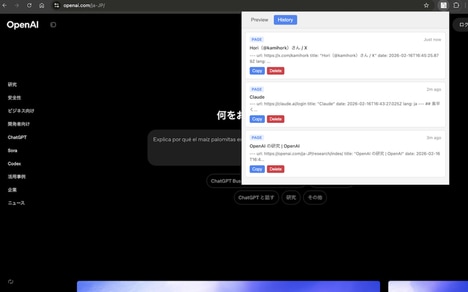
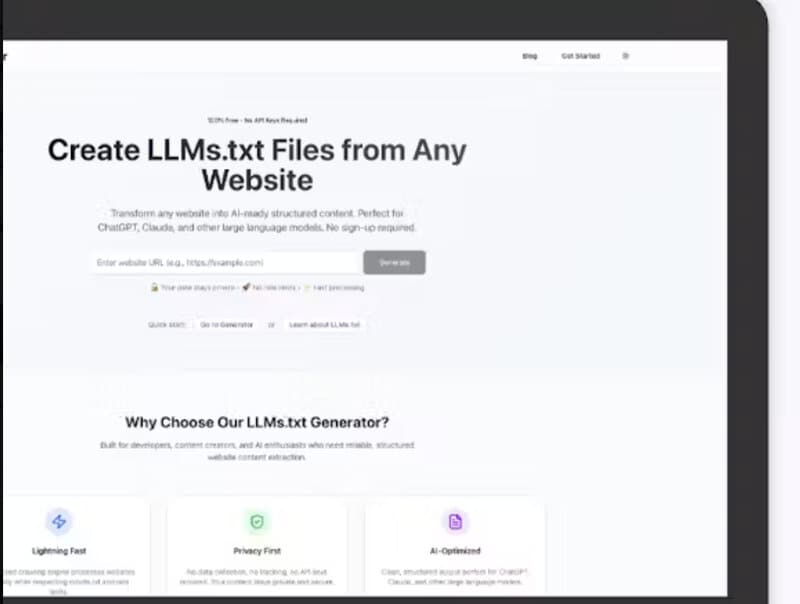
As AI tools increasingly rely on web content, businesses and creators need simple ways to make their websites easier for large language models to understand. LLMs.txt Generator converts websites into structured LLMs.txt files that can be used with tools such as ChatGPT, Claude, and other AI systems.
Users can transform a website without API keys, complicated setup, or even creating an account. The free tool is designed to make AI-ready content preparation faster while keeping the process simple and privacy-focused. By automatically structuring website information, LLMs.txt Generator helps make online content more accessible to AI models. It provides a quick and straightforward way to prepare websites for the growing AI-powered web. It provides a fast, free way to prepare website content for ChatGPT, Claude, and other large language models without requiring technical setup.
Image Credit: LLMs.txt
What Makes This Trend Stand Out
- AI-readable Websites
- Structured website files create new value in making digital content easier for large language models to parse, rank, summarize, and reuse across AI-powered discovery channels.
- No-code AI Optimization
- Simple browser-based tools are lowering the barrier for businesses to prepare content for AI ecosystems without developer resources, API access, or complex implementation steps.
- Privacy-focused Content Structuring
- Account-free and low-friction workflows signal demand for AI readiness solutions that minimize data exposure while improving machine accessibility for public web assets.
Sectors Adopting This
- Web Development
- AI-focused site preparation expands the role of web development from human-facing design to machine-readable content architecture for emerging search and assistant interfaces.
- Digital Marketing
- The rise of AI-mediated discovery is reshaping content visibility strategies as marketers look beyond traditional SEO toward formats optimized for chatbot and LLM interpretation.
- Saas Tools
- Lightweight automation platforms have room to differentiate by converting routine technical tasks into free or freemium utilities that support broader AI adoption among nontechnical users.