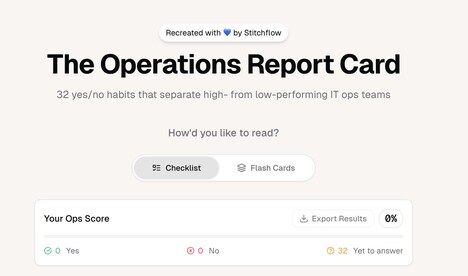

Leadership Test positions itself within the professional development and organisational performance space, offering a self-assessment focused on employee engagement capabilities. It provides personalised feedback intended to help leaders identify strengths and gaps in how they manage teams and foster workplace motivation.
The tool emphasises science-based evaluation, combined with actionable recommendations, aiming to translate assessment results into practical behavioural improvements. It aligns with increasing demand for accessible leadership development resources that do not require formal coaching or training programs. Its value lies in enabling scalable self-reflection for managers across different organisational levels. The effectiveness of the platform will depend on the validity of its assessment framework, clarity of its feedback, and how well users are able to translate insights into sustained leadership behaviour changes within real workplace environments.
Image Credit: Leadership Test
Key Themes Behind This Trend
- Science-based Self-assessment
- Embedding validated psychometric methods into lightweight self-tests creates potential to standardize leadership diagnostics across organisations.
- Scalable Leadership Development
- Growth in demand for low-cost, self-directed development suggests platforms could replace parts of traditional coaching by delivering consistent behavioural benchmarks at scale.
- Personalised Feedback Automation
- Automated, individualized coaching tips driven by assessment data open avenues for continuous micro-interventions that adapt to changing manager performance.
Where This Applies
- Human Resources
- HR functions may leverage integrated assessment tools to more accurately map skill gaps and redesign talent pathways based on empirical engagement metrics.
- Corporate Training
- Learning and development teams could incorporate self-assessments to create modular curricula that align instructional content with measured leader needs.
- Saas Platforms
- Cloud-based software providers stand to combine assessment engines with analytics and workflow integrations, enabling enterprise-wide adoption of data-driven leadership practices.