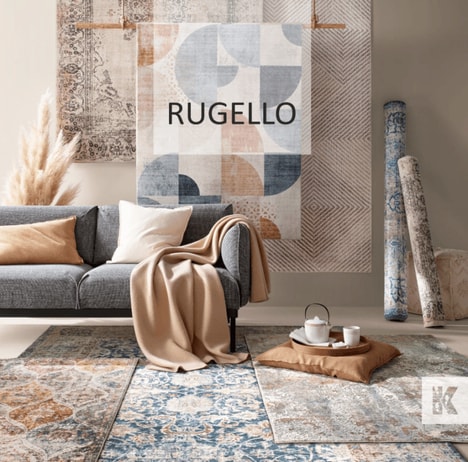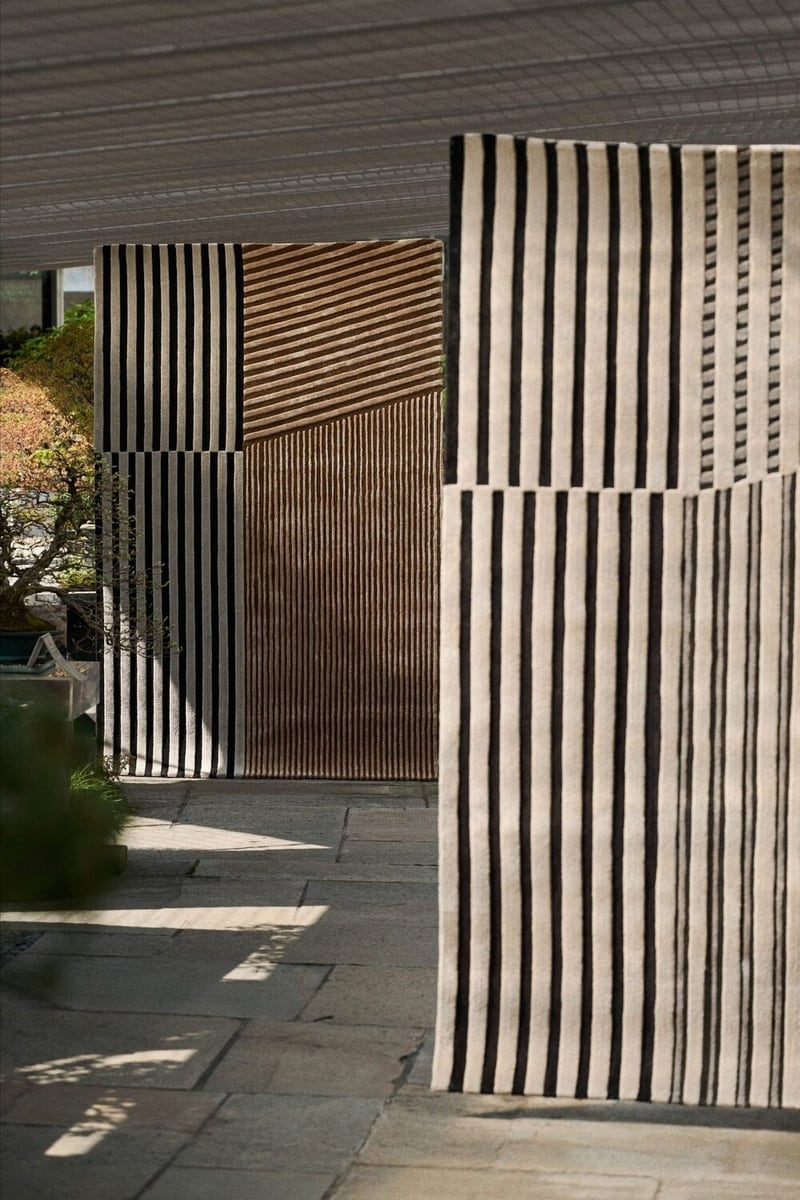
The Kengo Kuma x Jaipur Rugs FACES collection presents a series of handcrafted rugs developed from architectural references across Kuma’s built work. The FACES collection includes 16 designs that interpret façade patterns, structural rhythms, and layering techniques through weaving. Each rug translates elements such as latticework, light filtering, and spatial intervals into textile form, using wool and regenerated viscose to create depth and surface variation.
Kengo Kuma’s collaboration with Jaipur Rugs applies architectural concepts such as “Sukima” and “Bokashi” through tonal gradients, spacing, and layered composition. Designs draw from projects including the Suntory Museum of Art and GC Prostho Museum Research Centre, converting structural details into woven textures. The rugs are produced by artisans in Rajasthan, with natural tones like beige, taupe, and grey used to reflect material-driven palettes.
Image Credit: Jaipur Rugs
What Makes This Trend Stand Out
- Architectural-to-textile Translation
- Renditions of façades and structural rhythms into rugs suggest new methods for encoding building geometry and environmental performance into soft, portable surfaces.
- Material-driven Gradient Weaving
- Tonal gradations and layered compositions point toward textile techniques that replicate light modulation and depth typically achieved by architectural materials.
- Artisan-architect Collaborations
- Cross-disciplinary partnerships between designers and regional craftmakers indicate scalable models for translating high-design concepts into locally produced, craft-led products.
Sectors Adopting This
- Home Furnishings
- Designs that mirror architectural detailing open possibilities for rugs and soft goods to function as narrative focal points that bridge interior architecture and décor.
- Interior Design
- Spatial thinking embedded in textile surfaces enables new approaches to acoustic treatment, zoning, and visual layering within residential and commercial interiors.
- Textile Manufacturing
- Use of regenerated fibres and complex weaving techniques suggests shifts toward sustainable production processes that replicate architectural textures at scale.