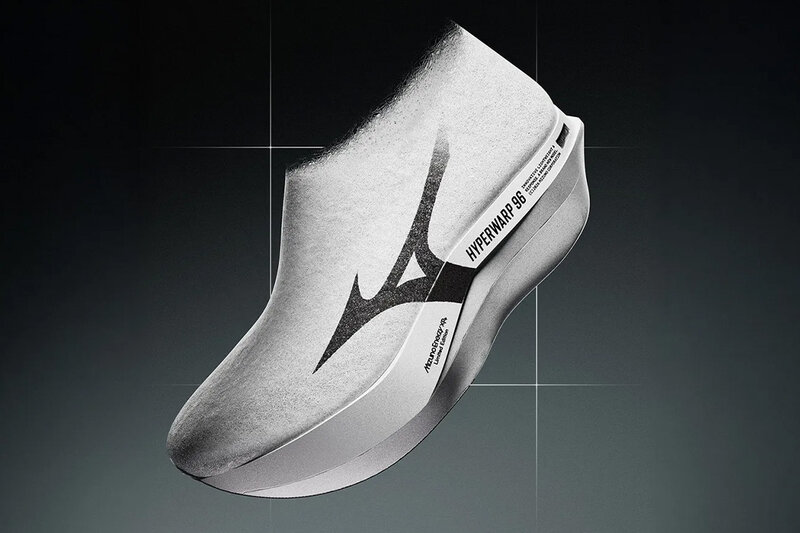
Mizuno's Hyperwarp 96 strips race-day footwear down so runners can feel less bulk underfoot, using a laceless build to cut away one more step and one more piece of material. It is a carbon-plated super shoe, meaning a racing shoe with a stiff plate inside, built around an all-new foam.
At 96 grams, it takes the weight record in the carbon-plated super shoe field, pushing the category toward pure reduction rather than more layered construction. The release is capped at 696 numbered pairs, which gives the design a niche, almost collector-minded edge instead of the feel of a standard performance drop.
For competitors, this raises the benchmark for how little shoe a premium racer can carry without giving up the plated setup serious runners expect. Brands chasing speed with heavier builds now have to answer a rival that turns extreme lightness into both a performance target and a scarcity play.
Image Credit: Mizuno
What Makes This Trend Stand Out
- Featherweight Performance Gear
- Extreme material reduction is reshaping premium sports products as athletes look for marginal gains through lighter, more responsive equipment.
- Laceless Race Footwear
- Minimal closure systems create room for streamlined fit technologies that reduce weight while preserving the locked-in feel expected by competitive runners.
- Limited-edition Performance Drops
- Scarcity-driven launches blend elite athletic utility with collector appeal, turning technical products into status-oriented releases.
Sectors Adopting This
- Athletic Footwear
- Carbon-plated racing shoes are becoming a proving ground for ultralight foams, experimental construction, and high-price performance differentiation.
- Sports Equipment
- Weight-saving design principles from elite footwear can influence broader categories where reduced bulk improves speed, comfort, and endurance.
- Performance Materials
- Advanced foams, plates, and textile alternatives present new pathways for suppliers focused on lighter structures with race-grade durability.