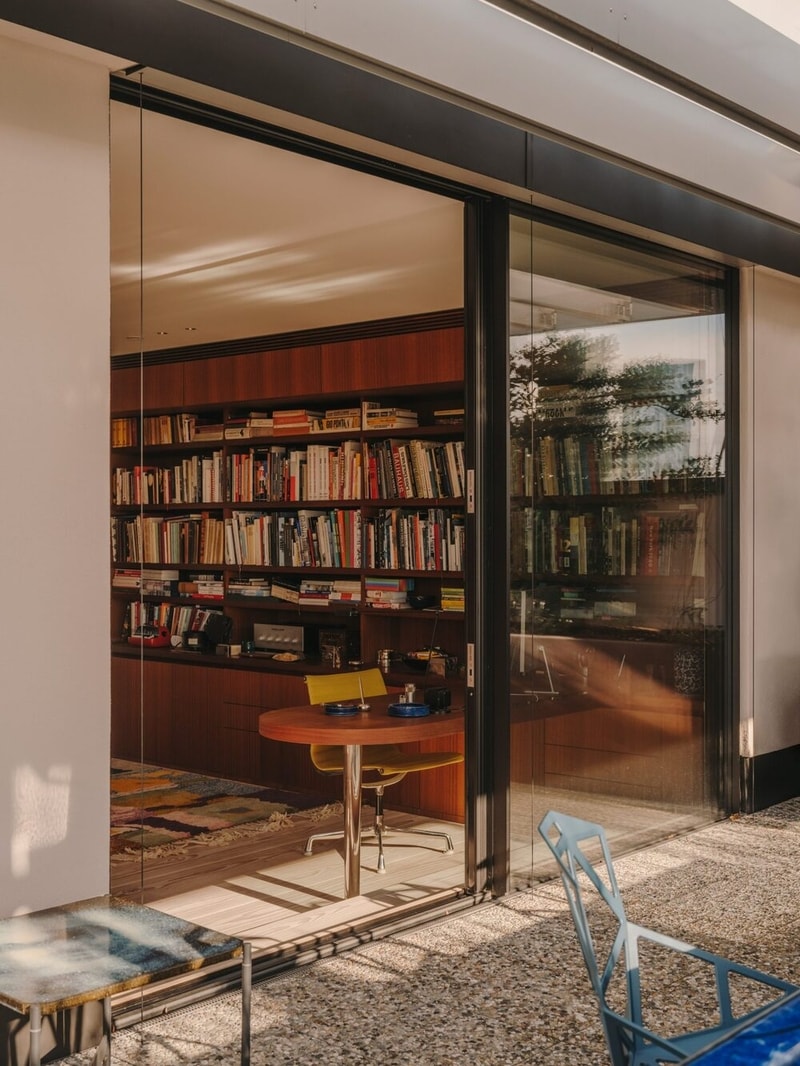
The Holzrausch Frankfurt penthouse introduces a rooftop extension and garden to a Wilhelminian-era building in the German city. The project expands the existing structure upward with a two-storey addition that clearly separates new construction from the original masonry shell. The upper level opens onto a landscaped roof terrace designed as an outdoor extension of the living space. Interior surfaces are defined by continuous timber panelling, creating a consistent material language across rooms and circulation areas.
The roof garden integrates planted areas and seating zones, forming a private outdoor space above the historic structure. Large openings and skylights draw natural light deep into the interior while maintaining visual connections to the terrace. Materials such as timber, terrazzo, and brushed metal are used throughout the apartment, aligning interior finishes with the exterior extension. The intervention retains the original building footprint while adding new spatial layers above
Image Credit: Holzrausch
Key Themes Behind This Trend
- Rooftop Urban Agriculture
- A surge in planted roof terraces transforms underused flat roofs into productive micro-gardens that redefine private amenity and localized food or biomass production potential.
- Heritage Vertical Additions
- Carefully delineated upward extensions on historic masonry structures are enabling increased floor area without altering original footprints, creating new typologies for adaptive reuse and densification.
- Timber Integrated Interiors
- Continuous timber panelling across rooms and circulation spaces establishes a cohesive material language that supports prefabricated, lightweight timber systems for rapid interior retrofit.
Where This Applies
- Real Estate Development
- Developers are increasingly valuing rooftop expansions as a method to unlock additional private amenity and rentable area in central urban parcels with preserved façades.
- Architectural Materials Manufacturing
- Producers of engineered timber, terrazzo, and weather-resistant metals can capitalize on demand for materials that bridge historic fabric and modern additions through customizable, high-performance components.
- Landscape Architecture and Urban Design
- Design firms specializing in compact, multifunctional roof landscapes are positioned to reimagine stormwater, biodiversity and recreational programming within dense historic contexts.