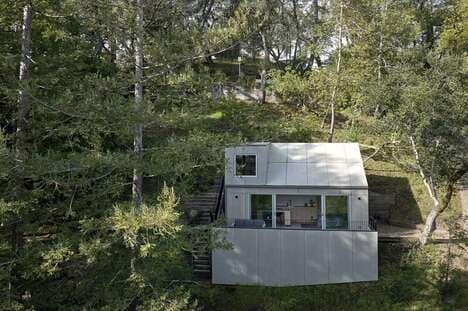
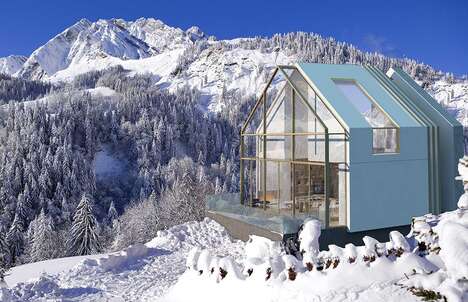
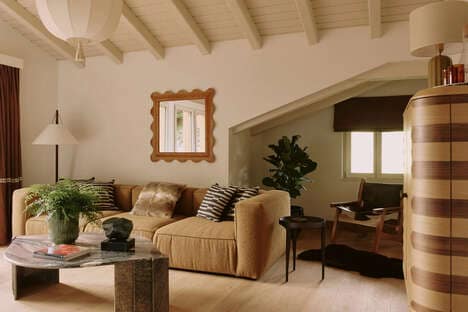
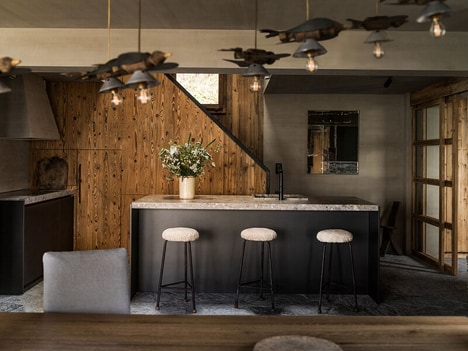
In Vals, Switzerland, there is a villa carved out of a mountain. In that villa, you'll find the 'Hidden Lines' guest room by Amsterdam designer Jeroen van Mechelen of Studio JVM.
The Hidden Lines guest room is a vaulted room crafted of angled cardboard panels. The overall look and aesthetic was inspired by medieval painting, which lends an interesting old-world comparison to Mechelen's modern day use of eco-friendly cardboard and paper-craft design.
Implications - Consumers are intrigued when biodegradable textiles such as cardboard are utilized in a manner resembling solid materials such as wood. Corporations may potentially generate lots of publicity from crafting a signature product utilizing biodegradable textiles while simultaneously appearing eco-friendly.
Key Themes Behind This Trend
- Biodegradable Textiles
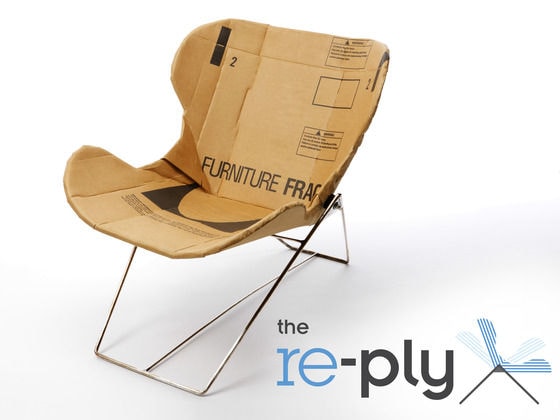
- Biodegradable textiles such as cardboard are being utilized in a manner resembling solid materials such as wood.
- Eco-friendly Design
- Corporations can generate publicity by crafting signature products utilizing biodegradable textiles and appearing eco-friendly.
- Paper-craft Design
- The use of paper-craft design in architecture and interior design is gaining interest and providing innovative solutions.
Where This Applies
- Architecture
- Architecture firms can explore the use of biodegradable textiles in their designs and create sustainable structures.
- Interior Design
- Interior design industry can embrace eco-friendly and paper-craft design elements to offer unique and sustainable living spaces.
- Sustainability
- The field of sustainability can explore the potential of biodegradable textiles and their applications in various industries.