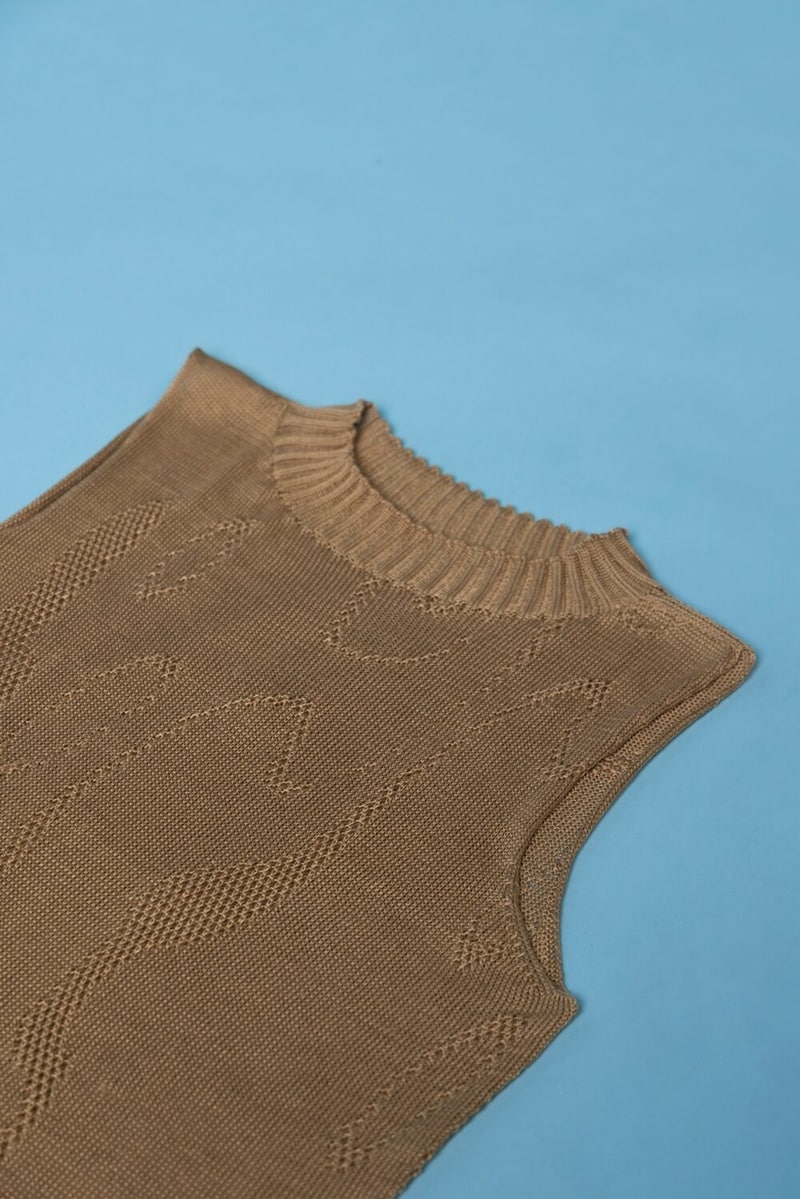
Researchers at Aalto University have transformed surplus wood from the Hahtiperä 17th-century shipwreck into textile fibre, which was spun into yarn and knitted into a dress using AI-assisted design and experimental textile technology. The wood fragments, originally uncovered in Oulu during construction work, were processed into dissolving pulp and converted into fibre using the Ioncell® method developed at Aalto. The resulting yarn retains a natural brown tone derived directly from the shipwreck material without added dyes or bleaching.
The dress was produced as part of a design research project combining material science, textile production, and computational knitting. Two identical dresses were created: one for the Oulu Art Museum exhibition and one for Aalto University’s own exhibition programme. The surface pattern of the dress is based on wood grain structures and digital noise, generated using an experimental design system that supports algorithmic pattern development for knitting
Image Credit: Aalto University
What's Driving This Trend
- Shipwreck-to-textile Upcycling
- Creation of garments from recovered historic timber reveals new provenance-driven luxury and circular-economy product niches with low chemical processing.
- AI-assisted Algorithmic Knit Design
- Algorithmic pattern generation integrated with computational knitting expands capabilities for bespoke, data-informed textile aesthetics and production efficiency.
- Wood-derived Dissolving Pulp Fibers
- Conversion of archaeological wood into dissolving pulp and yarn introduces alternative cellulose sources that reduce reliance on conventional wood and synthetic feedstocks.
Who This Affects Most
- Textile and Fashion
- High-value fashion segments gain access to distinct, story-rich materials and digitally generated patterns that differentiate offerings and justify premium pricing.
- Cultural Heritage Conservation
- Museums and heritage organizations encounter opportunities to transform conserved artifacts into revenue-generating, interpretive objects while extending material life cycles.
- Sustainable Materials Manufacturing
- Material producers exploring Ioncell®-style methods find potential to scale renewable cellulose fiber lines using nontraditional feedstocks and lower-dye processing.