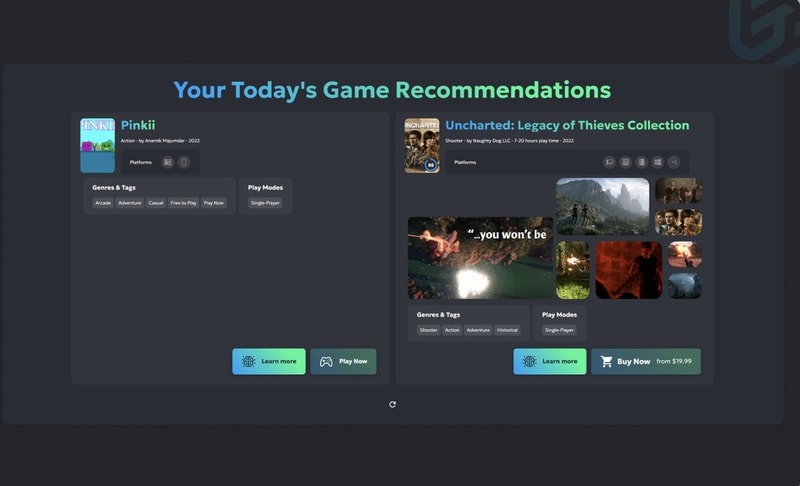
Opening a new browser tab is something people do countless times each day, often without discovering anything new. GameBrain Discovery transforms that routine action into an opportunity to explore games from across the gaming world. The Chrome extension presents a different game whenever a new tab is opened, turning idle browsing moments into quick discovery sessions.
Whether users are searching for their next indie favourite, a hidden gem, or a title they might otherwise overlook, the extension keeps fresh recommendations flowing throughout the day. The experience is lightweight, simple, and built around curiosity rather than endless searching. Instead of scrolling through store pages or recommendation lists, users encounter new gaming possibilities naturally as they browse the web. GameBrain Discovery turns an everyday browser habit into a continuous source of inspiration for players looking to expand their gaming horizons.
Image Credit: GameBrain Discovery
What Makes This Trend Stand Out
- Ambient Game Discovery
- Routine browser moments become low-friction discovery surfaces, creating opportunities for platforms to surface personalized entertainment without requiring dedicated search behavior.
- Micro-recommendation Tools
- Short, repeated recommendation experiences can reshape how consumers encounter niche content, especially when lightweight tools replace long browsing sessions.
- Browser-based Engagement
- Everyday web utilities offer new pathways for entertainment brands to maintain attention through subtle, contextual interactions embedded in existing digital habits.
Sectors Adopting This
- Gaming
- Indie studios and game marketplaces can benefit from discovery formats that expose overlooked titles to players outside crowded storefront environments.
- Browser Extensions
- Extension ecosystems are evolving into content discovery channels where simple productivity-adjacent features can support entertainment, commerce, and media recommendations.
- Digital Advertising
- Recommendation-driven tab experiences introduce alternative inventory models where promoted content feels exploratory rather than interruptive.