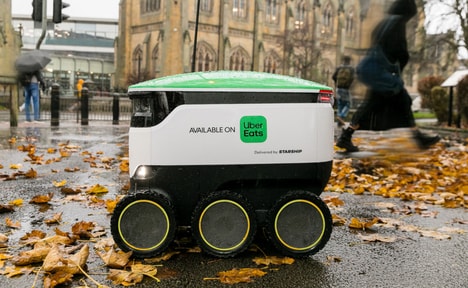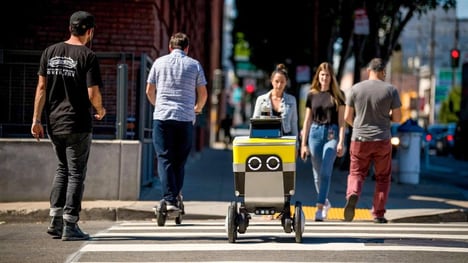
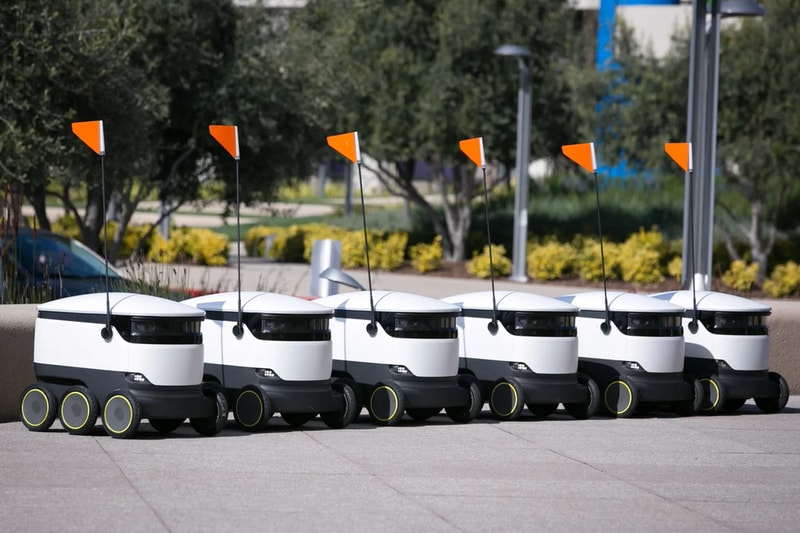
Florida Polytechnic University introduced a fleet of autonomous delivery robots in partnership with Starship Technologies, featuring small wheeled units that deliver food across the Lakeland campus.
The rollout began with vendors such as Einstein Bros. Bagels, Mosaic Café and Fire + Ash, and the robots were designed to handle curbs and wet weather using machine learning, AI and onboard sensors. The deployment also marked the university as the first U.S. site to use Starship 360, a point-of-sale system that integrates in-person ordering, robot delivery, mobile pickup and touchscreen kiosks.
For students and staff, the service aims to speed campus dining and increase convenience by meeting orders where people live and study, while providing a zero-emission alternative to short trips across campus.
Image Credit: Starship Technologies
What Makes This Trend Stand Out
- Autonomous Micro-logistics
- Small wheeled robots handling frequent, short-distance deliveries on dense sites suggest new automated fulfillment layers that can reduce labor costs and accelerate service cycles.
- Integrated Point-of-sale Robotics
- A unified system combining ordering, kiosks and robotic execution demonstrates potential for end-to-end commerce platforms that tightly couple front-end sales with autonomous fulfillment.
- Zero-emission Last-mile Mobility
- Electric delivery units replacing short vehicle trips point toward scalable low-carbon distribution models for high-frequency, local delivery routes.
Sectors Adopting This
- Higher Education Campus Services
- Campus dining and facilities management could be transformed by autonomous fleets that enable on-demand provisioning and reconfigure service footprints around real-time demand.
- Food Service and Catering
- Restaurants and campus vendors can leverage robotic delivery to expand reach, adjust order fulfillment models and rethink kitchen-to-consumer workflows.
- Urban Micro-mobility Infrastructure
- City planners and mobility providers may integrate robot-friendly pathways and charging stations, opening opportunities for new urban logistics networks and shared infrastructure.