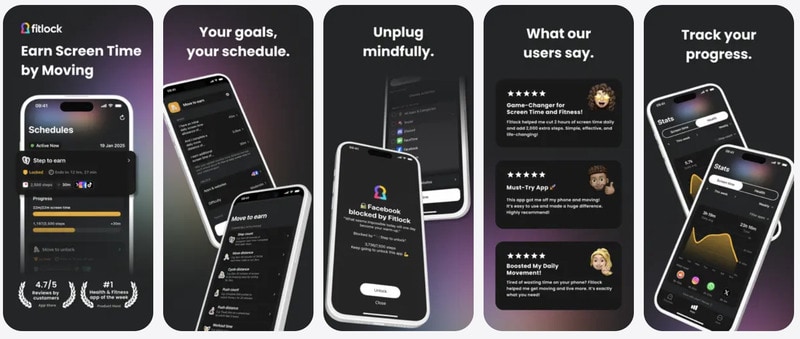
Fitlock introduces a behavioral design approach to managing screen time by tying app access to daily health and wellness activities. The tool enables users to set goals — such as steps walked, meditation minutes, or time spent outdoors — and restricts access to selected apps until those goals are met.
From a business standpoint, this model reflects a growing market for digital well-being tools that encourage healthier habits through accountability and incentive-based systems. Fitlock also supports diverse activity types, allowing users to integrate fitness tracking into their broader lifestyle routines. For organizations developing wellness programs or exploring productivity solutions, the platform demonstrates how habit-forming design can align personal health objectives with digital behavior. It highlights an emerging trend where technology not only monitors activity but actively shapes user engagement to promote balanced tech use.
Image Credit: Fitlock
Why This Trend Is Growing
- Wellness-linked App Access
- Technology is increasingly being used to incentivize healthier lifestyle choices by linking app access to the achievement of personal health goals.
- Accountability Through Digital Design
- Design approaches that integrate accountability into digital usage are reshaping the way users interact with technology to encourage healthier habits.
- Behavioral Health Tech Integration
- The integration of behavioral design in technology is fostering new trends where user health activities directly influence digital engagement, promoting tech-life balance.
Industries Being Reshaped
- Digital Well-being Tools
- Companies developing digital wellness tools are capitalizing on a trend that emphasizes user accountability and health-oriented incentives to improve lifestyle routines.
- Fitness Technology
- The fitness tech industry is evolving to support multi-faceted health activities, creating platforms where diverse user goals are linked to broader lifestyle and digital behaviors.
- Behavioral Design Applications
- Industries focusing on behavioral design are exploring new frontiers in how technology influences user interaction by aligning personal health objectives with digital access.