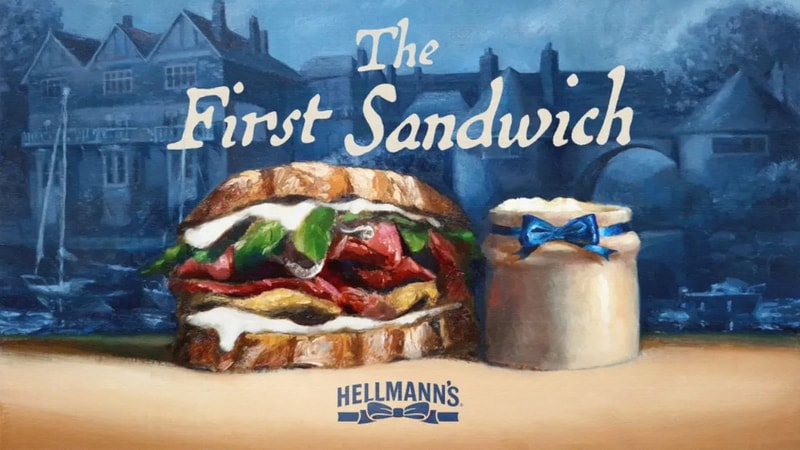
Sometimes the most exciting culinary discoveries aren't innovations but rediscoveries, as proven by Hellmann's, which revitalized a centuries-old recipe that holds a surprising and timeless appeal for today's adventurous eaters. The historically inspired "first sandwich" launched in the town of Sandwich, Kent, and the first 150 visitors to The Crispin Inn received a free sandwich on a first-come, first-served basis.
The sandwich is inspired by 18th-century sandwich ingredients, consists of Kentish cob, roast beef prepared in the style of the times, a slice of plum pudding, and is finished with a generous layer of Hellmann’s Mayonnaise. To promote this special launch, Hellmann’s partnered with award-winning historian Professor David Olusoga and food historian Annie Gray to research what the earliest version of the sandwich would have looked and tasted like.
Key Themes Behind This Trend
- Heritage Recipe Revival
- Blending authentic historical ingredients with contemporary palates reveals potential for novel product lines that differentiate brands through provenance and storytelling.
- Culinary Storytelling Marketing
- A focus on narrative-led product launches tied to historical anecdotes creates memorable brand experiences that can command premium positioning.
- Research-backed Food Innovation
- Historical and academic partnerships underpin credibility for experimental menu items and limited-edition releases that intrigue experiential eaters.
Where This Applies
- Food and Beverage
- Niche, historically inspired offerings present opportunities for product diversification, limited-run SKUs, and premium condiments anchored in authentic recipes.
- Tourism and Hospitality
- Culinary heritage activations tied to place-based stories can transform local inns and eateries into destination experiences with higher visitor engagement.
- Food Tech and Preservation
- Research into archival ingredients and preservation methods supports the development of novel supply chains and shelf-stable heritage products.