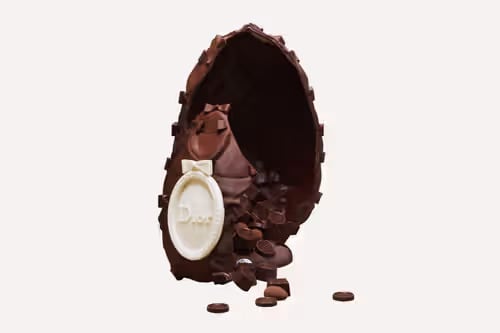
The Dior Chocolate Egg is a large-scale Easter creation developed by chef Yannick Alléno for the house’s 30 Montaigne address. The piece is built from dark and white chocolate and shaped around Dior’s signature medallion and bow motif, translating couture symbols into a sculptural dessert. Dior Chocolate Egg also includes hidden elements inside, with smaller chocolate pieces referencing cannage quilting, buttons, and the “CD” initials.
Alongside the chocolate piece, Dior Maison introduces trompe-l’œil ceramic plates featuring lifelike hens and painted eggs. These objects draw from 18th-century decorative traditions, designed to blur the line between tableware and display. The egg itself contains layered textures made from hazelnuts, almonds, puffed rice praline, and sobacha, combining crisp and smooth elements within the shell. The release is available at 30 Montaigne in Paris and select international locations.
Image Credit: Dior
What Makes This Trend Stand Out
- Couture-edible Hybrids
- Ablending of high-fashion motifs with artisanal foodcraft that repositions edible items as collectible luxury objects.
- Sculptural Confectionery
- The elevation of desserts into large-scale, structural pieces that function as both culinary offerings and visual centerpieces.
- Trompe-loeil Tableware
- Tableware designed to blur display and utility through lifelike painting and illusion techniques, merging decorative art with dining rituals.
Sectors Adopting This
- Luxury Fashion
- Brand extensions into edible art present opportunities for fashion houses to monetize heritage motifs through limited-edition culinary collaborations.
- Hospitality and Dining
- High-end restaurants and hotels can leverage sculptural desserts as experiential revenue drivers that enhance guest perception of exclusivity.
- Ceramics and Home Decor
- Decor makers exploring trompe-l’œil and hybrid display-dining objects could redefine tableware as artisanal statement pieces with collectible value.