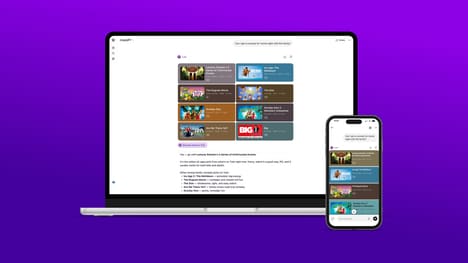
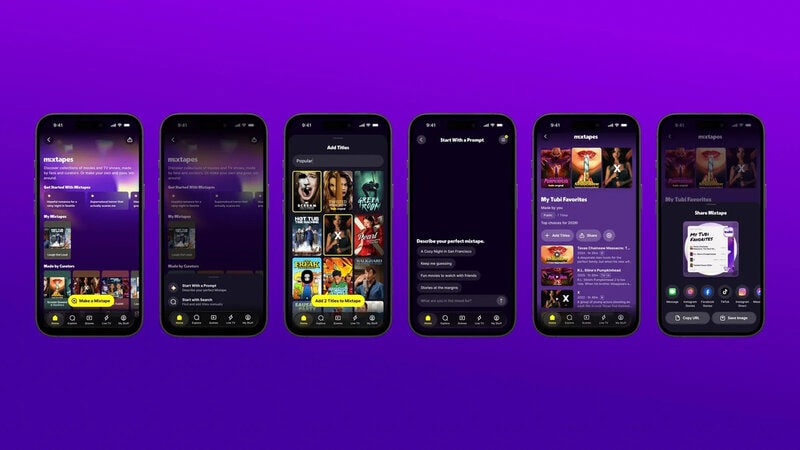
Tubi is adding a Mixtapes feature that turns its catalog into user-built movie and TV playlists. The tool lets people start from a mood prompt or build a list title by title, then rearrange, rename and personalize the result with a description and cover.
The feature lives in the Mixtapes tab on the home screen, where user-made lists sit next to selections from Tubi's curators. Finished mixtapes can be made public, kept private or shared with a card styled like a homemade DVD, giving the service a more social way to browse.
Mixtapes also gives Tubi a second layer of navigation on top of its 375,000+ movies and TV episodes. The format makes taste-based browsing feel more organized and more shareable, which can keep viewers inside the platform longer instead of treating search as the only way to find something to watch.
Image Credit: Tubi
Key Themes Behind This Trend
- Social Streaming Curation
- User-generated playlists transform passive catalogs into participatory entertainment spaces where personal taste, sharing mechanics and community discovery can deepen platform engagement.
- Mood-based Discovery
- Emotion-led prompts create more intuitive ways to navigate large content libraries, opening room for recommendation systems that reflect viewer context rather than only genre or history.
- Personalized Media Packaging
- Custom covers, descriptions and share cards give digital collections a tangible identity, blending nostalgia-inspired presentation with modern social distribution.
Where This Applies
- Streaming Entertainment
- Ad-supported platforms can differentiate crowded catalogs by layering social organization tools over content libraries to make discovery feel more human and sticky.
- Digital Media Platforms
- Interactive curation features expand the role of users from consumers to tastemakers, creating new engagement signals and shareable formats for audience growth.
- Recommendation Technology
- Playlist-building behavior supplies richer preference data that can improve personalization models through user intent, sequencing choices and thematic grouping patterns.