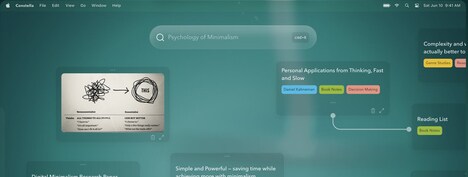

Munich startup Interloom introduced a Context Graph, a continuously updating model that maps how operational decisions are actually made inside enterprises, featuring ingestion of millions of real cases such as support emails, service tickets and call transcripts.
The product was unveiled with a $16.5M seed round led by DN Capital and participation from Bek Ventures and Air Street Capital, and the company operates across Munich, Berlin and London. Interloom’s Context Graph extracts patterns of expert resolution from tacit knowledge—expertise that often isn’t documented—and updates as each case is closed to preserve institutional memory.
Early customers include Zurich Insurance, JLL, Fiege, Commerzbank and Volkswagen, where the system has narrowed gaps between formal documentation and real workflows. For enterprises, the Context Graph helps deploy AI agents and onboard employees with practical, precedent-based guidance, reducing reliance on incomplete playbooks and easing knowledge loss as experienced staff depart.
Image Credit: Interloom
What Makes This Trend Stand Out
- Context Graphs for Operational Knowledge
- A Context Graph approach that maps how decisions are actually made offers a foundation for AI systems to mirror expert workflows and close gaps between playbooks and practice.
- Tacit Knowledge Extraction at Scale
- Platforms ingesting millions of support emails, tickets and transcripts reveal undocumented expert rules and heuristics that can be codified into reusable enterprise intelligence.
- Continuous Case-based Model Updating
- Models that update with each closed case preserve institutional memory over time, enabling systems to evolve with changing practices and personnel.
Sectors Adopting This
- Insurance
- Insurers benefit from encoded claim-resolution precedents derived from real-case data, which can reduce variance in adjudication and accelerate consistent outcomes.
- Banking and Financial Services
- Banks can leverage preserved operational knowledge from client interactions and support logs to lower onboarding friction and mitigate risk from staff turnover.
- Logistics and Supply Chain
- Logistics operators gain visibility into informal decision rules across warehouses and carriers, supporting more predictable exception handling and resource allocation.