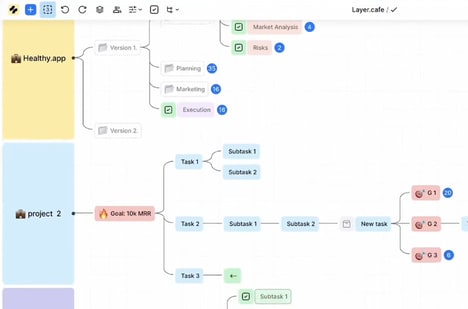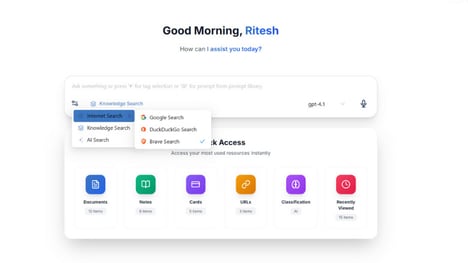

Trace is a London startup that launched from Y Combinator’s 2025 cohort and introduced an agent orchestration platform designed to give AI agents actionable corporate context, featuring a knowledge graph that maps tools like email, Slack and Airtable.
The system accepts high-level prompts such as designing a microsite or planning sales initiatives and returns step-by-step workflows that split work between human contributors and AI agents. When tasks go to agents, Trace supplies the precise data those agents need to complete sub-tasks, reducing manual onboarding. The platform aims to automate the coordination layer for agentic AI and was announced alongside a $3 million seed raise.
For enterprises, Trace’s approach promises faster agent deployment and fewer context gaps, reflecting a broader shift from prompt engineering to context engineering in workplace automation.
Image Credit: Trace
What Makes This Trend Stand Out
- Context Engineering
- Shifting emphasis from prompt crafting to structured contextual inputs opens possibilities for platforms that encode corporate knowledge into reusable, queryable layers that reduce ambiguous agent behavior.
- Agent Orchestration
- Coordinating multiple specialized agents through an orchestration layer creates room for systems that dynamically allocate tasks, optimize handoffs, and maintain execution state across human and machine contributors.
- Human-AI Workflow Partitioning
- Explicitly splitting workflows between humans and agents reveals opportunities for hybrid process designs that assign cognitive, judgment-heavy steps to people while automating repetitive, data-driven subtasks.
Sectors Adopting This
- Enterprise Software
- Integration of contextual knowledge graphs with existing enterprise tools suggests new product categories that embed actionable corporate context into operational suites and reduce setup friction for AI features.
- Sales and Marketing
- Access to orchestrated workflows with precise customer and campaign context points toward systems that can autonomously draft bespoke outreach sequences while preserving human oversight for relationship-critical decisions.
- Knowledge Management
- Mapping organizational information into graph-backed, agent-accessible repositories indicates potential for platforms that automatically surface, maintain, and reconcile institutional knowledge across teams and tools.