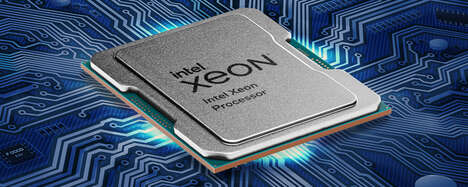
Because most information technology is modeled after our own neuro-mechanics, Intel researchers have developed a processor that uses "cognitive computing," allowing machines to learn, develop autonomously and co-ordinate separate ideas together.
30 years ago, Intel launched their first line of processors, completely transforming the way all modern computers behave. Today, after receiving a $41 million grant from DARPA, Big Blue is prepared to throw the tech world, and society in general, into upheaval once again. Compared to our brains' 1 trillion neurons, the cognitive computing processors only sport a paltry 256 virtual neurons, although it's enough to crunch huge numbers and produce photo-realistic images.
Beyond the understandably scary implications of machines that capable of learning, project lead Dharmendra Modha explains that the new processors can sense real-world changes like motion and temperature increases, making them less fragile and more versatile. I can almost here the Terminators marching here!
What's Driving This Trend
- Cognitive Computing
- The development of processors using cognitive computing presents an opportunity for creating autonomous and versatile machines capable of learning and coordinating separate ideas.
- Virtual Neurons
- The use of virtual neurons in processors presents an opportunity for the development of technologies capable of crunching huge numbers and producing photo-realistic images.
- Sensing Real-world Changes
- The ability of processors to sense real-world changes such as motion and temperature increases presents an opportunity for the development of less fragile and more versatile technologies.
Who This Affects Most
- Technology
- The technology industry is likely to see an influx of new products and services built around cognitive computing and virtual neuron technology.
- Artificial Intelligence
- The development of processors using cognitive computing presents an opportunity for disruption in the artificial intelligence industry.
- Computer Hardware
- The development of processors using virtual neurons presents an opportunity for disruption in the computer hardware industry.