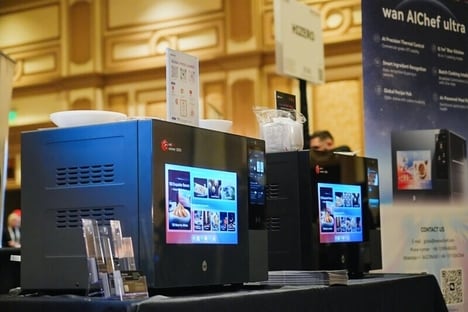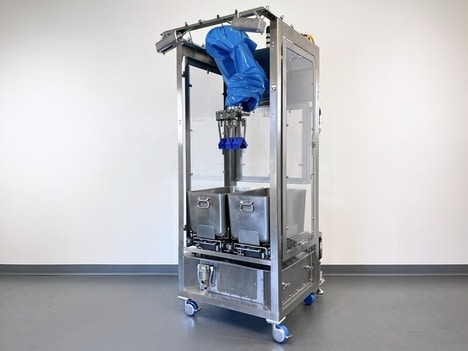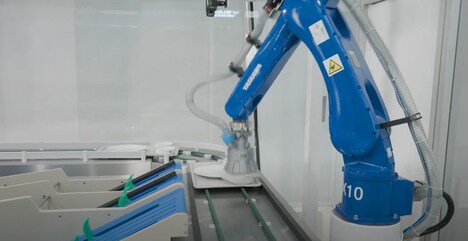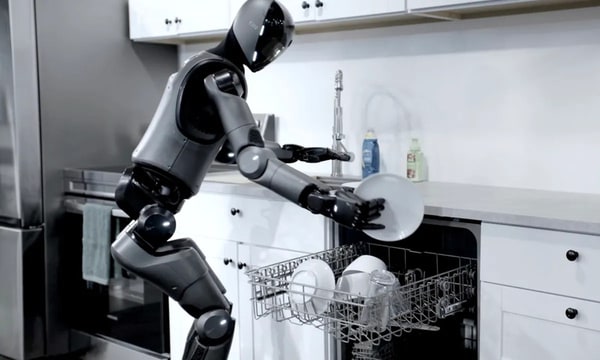
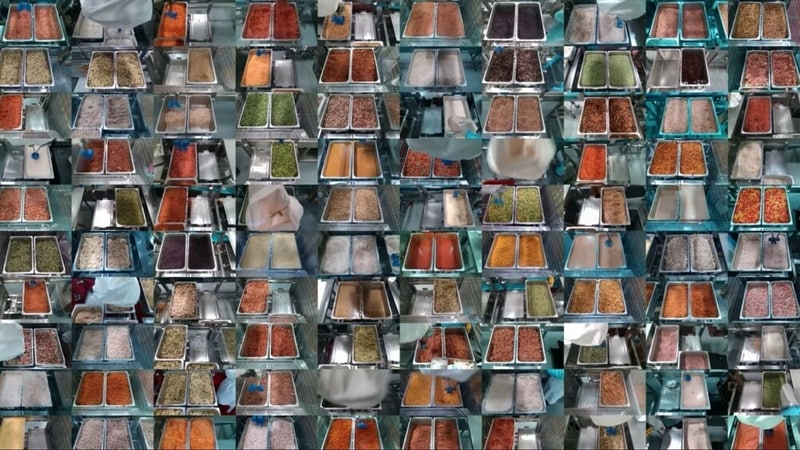
Chef Robotics — a market leader in food robotics and physical AI — has announced that its robots have completed 100 million servings in production across more than a dozen facilities in the United States, Canada, and Europe. This is noteworthy because it represents an order of magnitude more than all other food robotics companies combined.
Chef Robotics deliberately focused on food manufacturing tasks such as portioning and assembly rather than commercial kitchens. The company trained its models on real-world production data from customer facilities.
Consumers would be interested in this innovation because the food industry faces a chronic labor shortage that affects everything from restaurant menus to grocery store prices, and when food manufacturers cannot find enough workers to portion, assemble, and package meals, the result is inconsistent product quality, reduced production capacity, and ultimately higher costs passed along to shoppers.
Image Credit: Chef Robotics
What's Driving This Trend
- Scale of Food Robotics
- Widespread deployment reaching 100 million servings signals the emergence of high-throughput robotic systems that can displace manual labor and standardize output across multi-site production networks.
- Data-driven Physical AI
- Training models on real-world production data creates adaptive robotic capabilities that can optimize portioning, reduce waste, and continuously improve through operational feedback loops.
- Manufacturing-focused Robotics
- Concentrating on assembly and portioning rather than front-of-house tasks highlights a shift toward task-specific robots that integrate into existing food production lines and redefine factory labor roles.
Who This Affects Most
- Food Manufacturing
- Automated portioning and assembly technologies have the potential to transform throughput, consistency, and labor cost structures across meal-kit, ready-meal, and ingredient processing plants.
- Grocery Retail
- In-store and central kitchen automation could influence product availability, pricing dynamics, and the feasibility of fresher prepackaged options on supermarket shelves.
- Contract Food Production
- Third-party co-packers and private-label manufacturers may be reshaped by robotics that enable faster scaling, tighter quality control, and new service offerings for smaller brands.