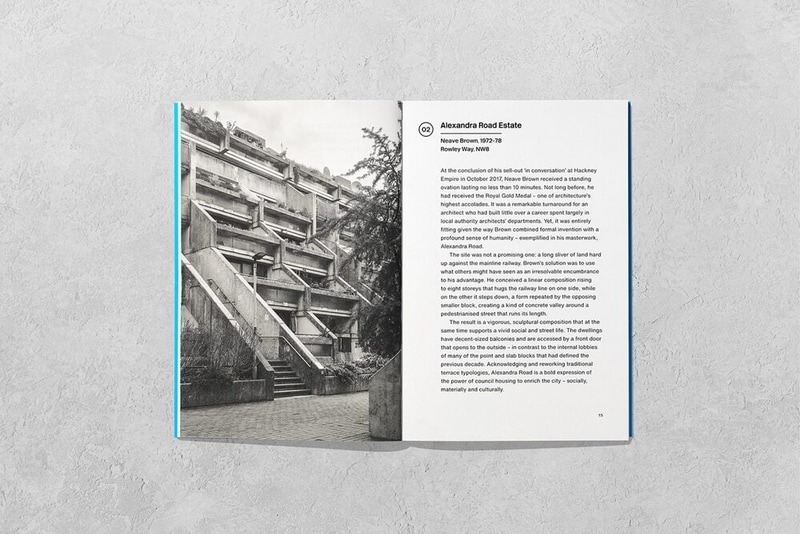
The Brutalist London book by Owen Hopkins and Nigel Green surveys more than 50 post-war buildings across the British capital. Published by Blue Crow Media, the guidebook covers a range of structures including housing estates, civic buildings, churches, and infrastructure. It features sites such as the Barbican Estate, Southbank Centre, and Trellick Tower alongside lesser-known projects. The publication combines Hopkins’ architectural writing with Nigel Green’s black-and-white photography, focusing on material, form, and spatial composition.
The book positions these buildings within the context of post-war reconstruction, when architecture was used to address housing shortages and urban planning challenges. It examines how concrete construction and large-scale planning shaped London’s built environment during this period. The guide includes maps and structured entries, presenting each building with visual documentation and descriptive analysis.
Image Credit: Nigel Green
What's Driving This Trend
- Brutalist Heritage Revival
- Rising public and scholarly interest in post-war concrete landmarks reveals potential for reinterpretation of utilitarian structures as culturally valuable assets that upend typical heritage conservation priorities.
- Concrete-centric Photographic Storytelling
- Black-and-white photographic narratives that emphasize materiality and form open pathways for visual-led platforms to reframe architectural appreciation and monetize archival aesthetics.
- Guidebook-led Urban Rediscovery
- Structured, map-driven guides highlighting overlooked civic and housing projects suggest new models for localized discovery economies that shift attention and foot traffic toward nontraditional urban attractions.
Who This Affects Most
- Architecture and Adaptive Reuse
- The robust structural systems of Brutalist buildings present opportunities for adaptive-reuse practices that disrupt standard redevelopment cost models by leveraging existing mass and volume.
- Cultural Tourism and Publishing
- Niche guidebooks documenting specialized architectural movements indicate demand for experience-led publishing and tours that reconfigure how cultural tourism packages urban narratives.
- Construction Materials and Technology
- Interest in the longevity and texture of exposed concrete highlights prospects for advanced material treatments and preservation technologies that change lifecycle economics for post-war structures.