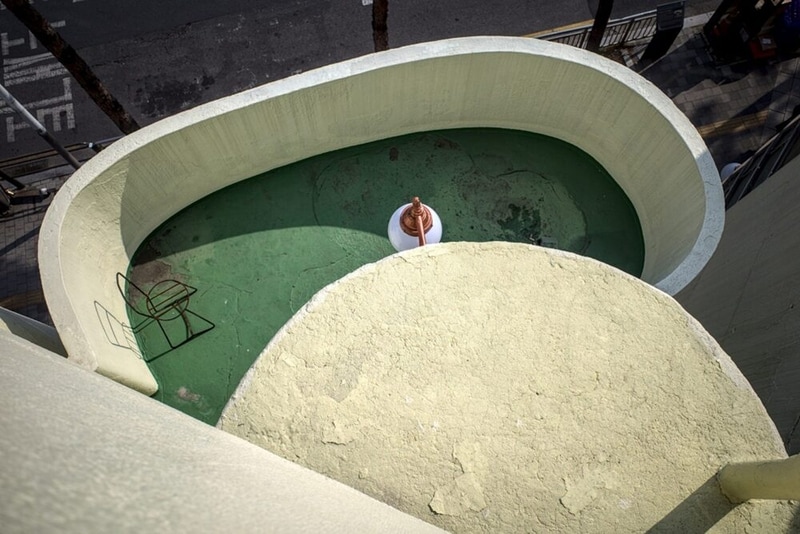
Paul Tulett’s Brutalist Korea presents a photographic survey of post-war concrete architecture across South Korea, documenting over 90 buildings through more than 220 images. The book captures structures across cities including Seoul, Busan, Daegu, Daejeon, and Jeju Island, spanning government complexes, universities, cultural institutions, and housing developments. The images focus on raw concrete surfaces, modular repetition, and large-scale forms shaped during periods of rapid industrialisation.
The new and bold publication traces architectural output from the 1960s and 1970s, when brutalism emerged during national reconstruction following the Korean War. Architects including Kim Swoo-geun and others adapted modernist principles to local conditions, producing buildings defined by geometric massing and exposed material. The book compiles projects across urban and coastal settings, presenting a range of structures situated within different regional landscapes across the country.
Image Credit: Brutalist Korea
What's Driving This Trend
- Revival of Brutalist Aesthetics
- A renewed appreciation for raw concrete forms and modular geometry creates demand for contemporary projects that reinterpret mid‑20th century monumentalism with modern sustainability and digital fabrication techniques.
- Photographic Archival of Architectural Heritage
- High‑quality photobooks and digital archives documenting postwar buildings enable new platforms for provenance, virtual exhibitions, and data‑driven preservation strategies tied to cultural value and scholarship.
- Adaptive Reuse of Concrete Structures
- Repurposing large‑scale institutional and housing projects from the 1960s–70s opens opportunities for hybrid programs that combine community services with climate retrofits and performance upgrades.
Who This Affects Most
- Architecture and Urban Planning
- Design firms and planners face opportunities to integrate heritage brutalist typologies into contemporary masterplans that balance historical integrity with resilience and user experience.
- Cultural Tourism and Publishing
- Photography-led publications and curated tours centered on architectural narratives can drive niche tourism markets and immersive storytelling products around overlooked modernist sites.
- Materials and Construction Technology
- Advances in concrete repair, low‑carbon mixes, and surface treatments could transform maintenance and retrofit approaches for aging exposed‑concrete buildings while addressing environmental performance.