



The Bloomberg Meeting Space by Lazerian is Paper-Made
Jana Pijak — November 17, 2011 — Art & Design
References: bloomberg & sofiliumm.wordpress
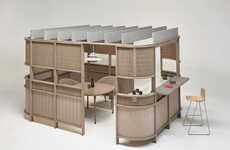
The Bloomberg Meeting Space by Lazarian fuses creativity with environmentally conscious design ideals. English designer Liam Hopkins of Lazerian used waste cardboard as a primary material when constructing a meeting area inside Bloomberg's London headquarters.
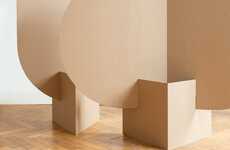
The media company donated its own wasted cardboard in order to make the project happen. The Bloomberg Meeting Space by Lazerian uses re-purposed cardboard material to form a large curve-linear design constructed from smaller, triangular shapes. Hopkins calls the cave-like structure Pupa because of its association with natural habitats such as cocoons, nests and bee-hives.
The dynamic element envelops a table and chair combination, constructed from broken down wooden shipping pallets. Lazarian's use of triangles increases the acoustical and structural elements of the cardboard material and a cocoon shape allows for privacy. The distinctively designed space is both functional and visually stunning.
Image Credit: Lazerian
The media company donated its own wasted cardboard in order to make the project happen. The Bloomberg Meeting Space by Lazerian uses re-purposed cardboard material to form a large curve-linear design constructed from smaller, triangular shapes. Hopkins calls the cave-like structure Pupa because of its association with natural habitats such as cocoons, nests and bee-hives.
The dynamic element envelops a table and chair combination, constructed from broken down wooden shipping pallets. Lazarian's use of triangles increases the acoustical and structural elements of the cardboard material and a cocoon shape allows for privacy. The distinctively designed space is both functional and visually stunning.
Image Credit: Lazerian
Trend Themes
-
Environmentally Conscious Design — Using recycled cardboard as a primary material in interior design leads to more sustainable and eco-friendly construction projects.
-
Creative Repurposing — Finding innovative ways to repurpose waste materials, like cardboard, can result in unique and visually striking designs.
-
Acoustical and Structural Enhancement — Using triangular shapes in construction can improve sound absorption and structural integrity.
Industry Implications
-
Interior Design — The use of cardboard as a primary material in interior design opens up opportunities for eco-friendly and visually appealing designs.
-
Sustainable Architecture — Incorporating recycled materials, such as cardboard, in architectural projects can contribute to sustainable building practices.
-
Furniture Design — Repurposing cardboard and wooden shipping pallets for furniture construction presents opportunities for sustainable and inventive furniture designs.
3.4
Score
Popularity
Activity
Freshness