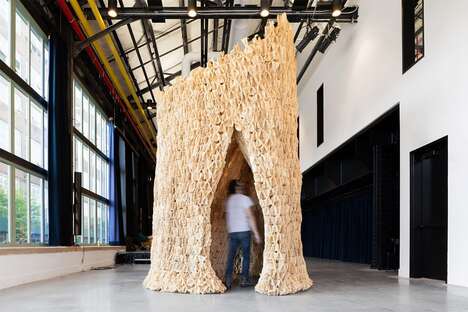
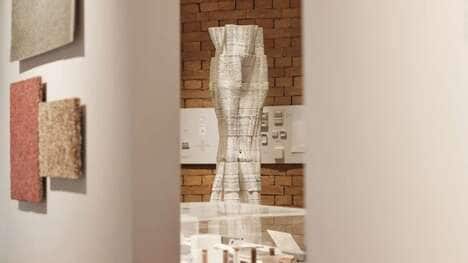
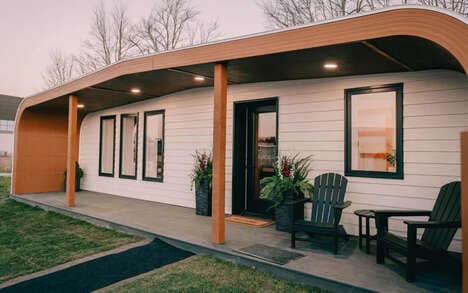
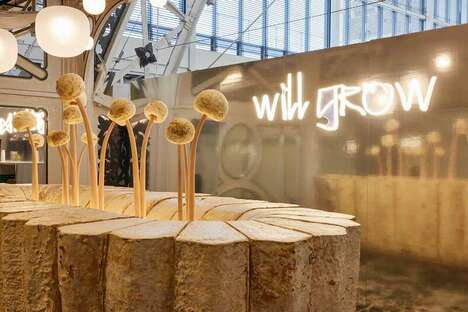
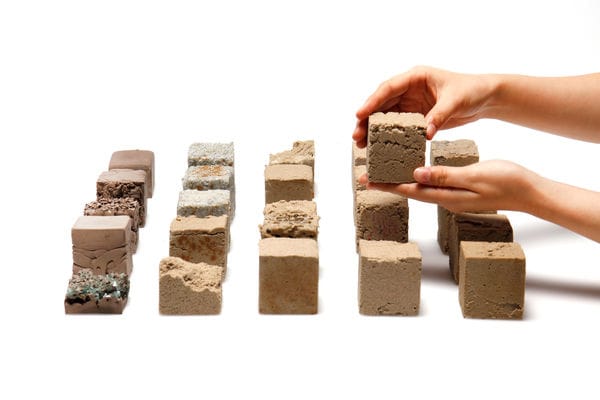
With its biodegradable buildings, Cleveland-based studio Redhouse Architecture is working to pave the way to sustainability and affordable housing. Currently, the firm is in the process of perfecting a technique that is described as "biocycling." The idea is to tear down derelict homes and to create pulp from the construction waste. Afterward, the material is mixed with mushroom mycelium. This is a vegetative part of fungi and it has the ability to "bind the mixture together as it grows, creating a mass that can be compressed to form [a] new [...] material." Architects can then cut it and use it as bricks or insulation for biodegradable buildings. This unlocks the possibility for sustainable and affordable permanent or temporary accommodations.
Thus, the biodegradable buildings do not only speak to ecology but also actively address the housing crisis in Cleveland.
What Makes This Trend Stand Out
- Biodegradable Building Materials
- The use of biodegradable materials in construction presents a disruptive innovation opportunity for the architecture industry.
- Circular Economy
- Implementing biocycling techniques in construction can contribute to the development of a circular economy, creating opportunities for waste reduction and resource efficiency.
- Sustainable Affordable Housing
- The creation of biodegradable buildings offers a solution to the housing crisis by providing sustainable and affordable accommodations.
Sectors Adopting This
- Architecture
- The architecture industry can explore the potential of using mushroom mycelium as a construction material for environmentally-friendly and cost-effective building projects.
- Construction
- The construction industry can adopt biodegradable building materials and techniques to contribute to sustainability and address the housing crisis.
- Eco-friendly Products
- The demand for eco-friendly building materials and solutions is rising, creating opportunities for companies to develop and market biodegradable construction products.