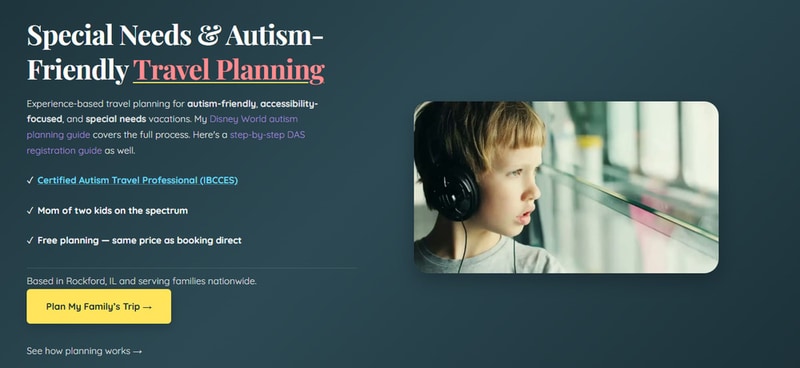
Magic Bean Travel Co., a Rockford-based agency founded by a Certified Autism Travel Professional who is also a mother of two children on the spectrum, has released a free library of 27 detailed planning guides focused on accessible and autism-friendly travel.
The resource collection includes a 5,720-word accessible travel guide covering sensory strategies, destination recommendations, theme park accommodation processes, and a step-by-step walkthrough of Disney's Disability Access Service system, with additional resources addressing Universal Orlando, cruise options for autism families, and budget breakdowns for trips ranging from $5,000 to $20,000 dollars.
For parents who have avoided travel due to fear of meltdowns, unpredictable environments, or the sheer difficulty of piecing together scattered information, having a single, free, and comprehensive autism-friendly travel hub written by someone with lived experience provides both practical guidance and emotional reassurance.
Image Credit: Magic Bean Travel Co.
What Makes This Trend Stand Out
- Accessible Travel Personalization
- A rise in tailored itineraries and sensory-aware accommodations signals potential for platforms that customize travel experiences to individual neurodiverse needs.
- Experience Design for Neurodiversity
- Products and environments engineered with reduced sensory overload and predictable routines point to new standards in inclusive design across venues and transit systems.
- Comprehensive Peer-led Information Hubs
- Firsthand, free resource libraries curated by lived-experience experts indicate demand for trusted community-driven knowledge bases that consolidate fragmented accessibility information.
Sectors Adopting This
- Travel and Hospitality
- Hotels, airlines, and booking platforms that integrate sensory profiles and staff training could redefine accessibility expectations for families traveling with autistic members.
- Theme Parks and Attractions
- Parks that embed structured access systems and quiet zones into operational design may transform visitor flow and broaden market appeal to neurodiverse guests.
- Cruise and Tour Operators
- Itineraries and ship layouts optimized for predictability and low-stimulus experiences could open new market segments among families seeking controlled environments for extended travel.