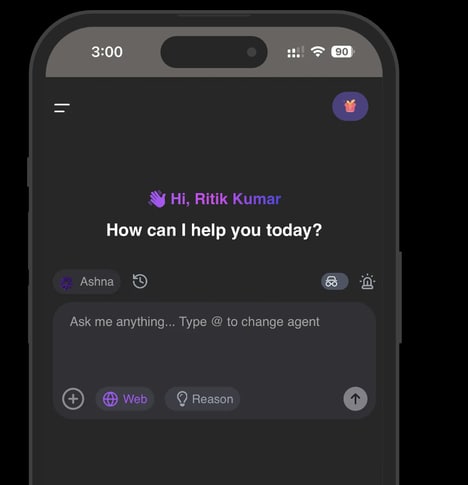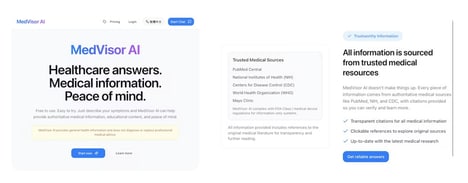
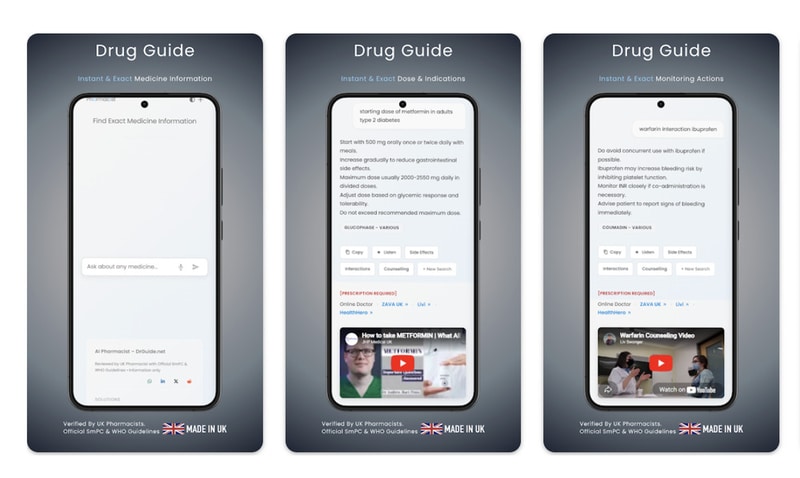
Aspirin AI is an AI-powered healthcare assistant designed to provide medicine and pharmaceutical information quickly. It is built for both healthcare professionals and patients seeking accessible medication insights.
The platform helps deliver information about medicines in seconds, supporting faster reference and decision-making in clinical and personal healthcare contexts. It is designed to support modern healthcare workflows by making drug-related information easier to access through AI-powered assistance. The focus is on speed, clarity, and convenience.
Aspirin AI is aimed at doctors, nurses, healthcare workers, and patients who need reliable medicine information on demand. By combining AI with healthcare knowledge, it helps simplify access to pharmaceutical guidance. The app is currently available on Android, with an iOS version planned for release later.
Image Credit: Aspirin AI i
Key Themes Behind This Trend
- AI-powered Medication Guidance
- Rapid, context-aware medication summaries reduce cognitive load for clinicians and create opportunities for integrated decision-support that alters prescribing workflows.
- On-demand Clinical Reference
- Always-available drug information at point-of-care shortens time-to-decision and enables decentralized clinical models that shift reliance away from centralized pharmacists.
- Cross-user Healthcare Assistants
- Unified interfaces serving Both Professionals And Patients blur role boundaries and enable shared-care tools that transform patient engagement and clinical communication.
Where This Applies
- Pharmaceuticals
- Concise AI summaries of drug properties and interactions could change how Pharma Companies disseminate labeling and post-market surveillance data.
- Digital Health Platforms
- AI-First medication features embed into EHRs and consumer apps, potentially redefining platform value propositions around speed and accuracy of drug information.
- Mobile Health Apps
- On-Device medication assistants create new opportunities for personalized, offline-capable services that reshape mobile care delivery.