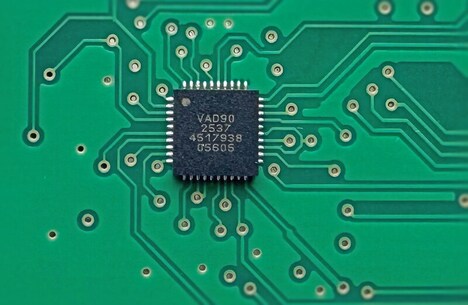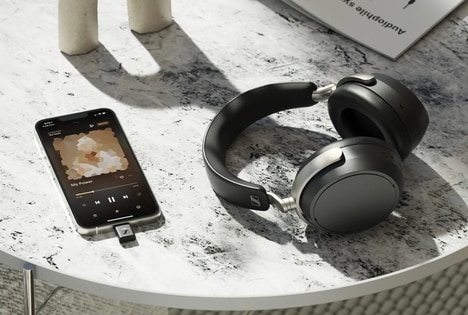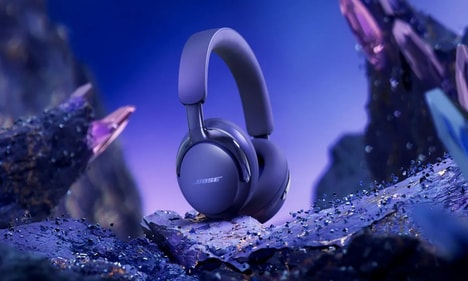

Anker introduced Thus, a Compute-in-Memory (CIM) AI audio chip designed to run neural networks locally on tiny wearables. The company said it will debut Thus inside a new headphone model at its Anker Day event on May 21, featuring on-device processing that integrates compute directly into NOR flash memory cells for faster read speeds.
Thus packs AI into a compact footprint suited to power-constrained products like earbuds, operating with milliwatt-level efficiency while keeping storage and processing colocated. Anker highlighted one named feature, Clear Calls, which will run a large neural network on-device supported by eight MEMS microphones and two bone-conduction sensors to improve call clarity and noise suppression in difficult environments.
If successful, Anker plans to extend Thus to other mobile accessories and IoT devices, making advanced audio AI viable without cloud dependence.
Image Credit: Anker
What's Driving This Trend
- Compute-in-memory Audio Processing
- Localizing neural compute inside memory arrays reduces latency and power consumption, permitting richer audio models to run on milliwatt‑scale wearables.
- On-device Neural Noise Suppression
- Running large speech‑enhancement networks on the device enables high-quality call clarity and robust noise suppression without cloud dependency.
- Sensor-fusion Voice Enhancement
- Integrating MEMS microphones and bone‑conduction sensors with on-chip AI creates more context-aware and accurate voice capture in challenging acoustic environments.
Who This Affects Most
- Consumer Audio
- Headphone and earbud manufacturers can deliver premium call and ANC experiences with privacy-preserving, cloud‑free intelligence built into hardware.
- Wearable Devices
- Wearables and hearables are positioned to include sophisticated speech models and personalized audio features while meeting strict power and size constraints.
- Iot Edge Devices
- Smart home and edge sensors could adopt low‑power on‑chip speech processing to enable private, real‑time voice interfaces and noise filtering at scale.