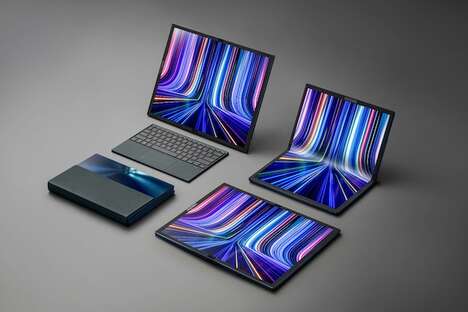
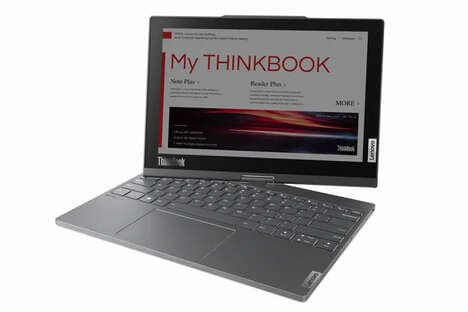
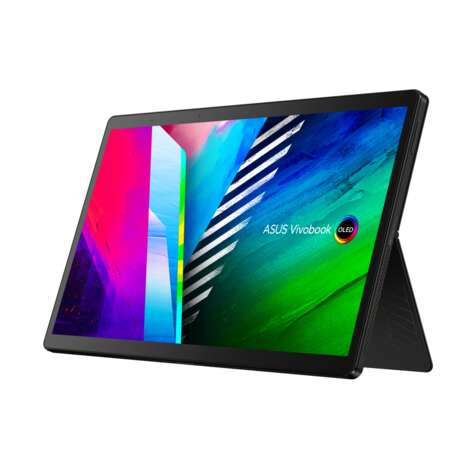
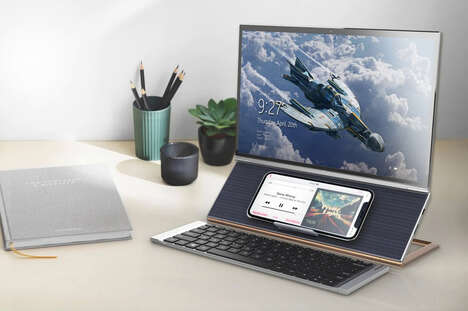
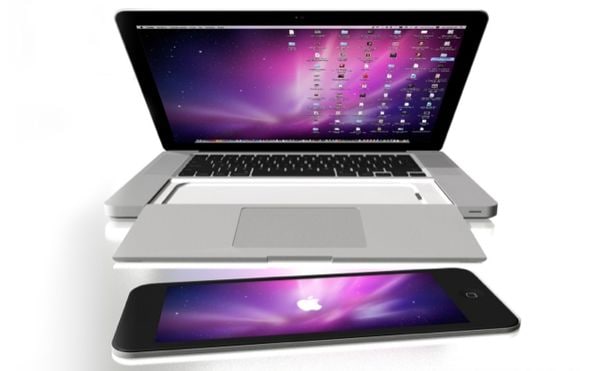
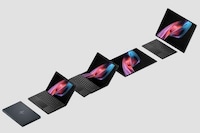
What would you call a touch-screen tablet and laptop combined into one device? Acer calls it the Aspire R7. When closed, it looks like just any other laptop; when opened, Acer's patented Ezel hinge flexibly pivots the screen, while firmly holding it in place at each angle.
The 15-inch screen can be adjusted to fold down, facing up into a big tablet. However, the Aspire R7 still possesses components of a laptop: a keyboard, track pad and USB ports.
It's interesting to see inventive devices that morph two (or more) into one; the two-in-one aspect of the Aspire R7 will surely be its major selling point. More and more electronic devices appear to cluster the market, while on-the-go consumers become less tolerant of burdensome carrying loads. This tablet and laptop-in-one concept could well be applied to many other industries.
What's Driving This Trend
- Two-in-one Devices
- The Aspire R7 showcases the trend of combining multiple electronic devices into one, providing convenience and efficiency for consumers.
- Flexibility
- The Ezel hinge of the Aspire R7 highlights the trend of flexible screens, offering users customizable viewing angles and ergonomic design.
- Minimalist Portability
- The Aspire R7 embodies the trend of minimalist, portable devices that cater to the needs of on-the-go consumers.
Who This Affects Most
- Technology
- The technology industry can explore opportunities for creating more innovative two-in-one devices with versatile features and improved functionality.
- Consumer Electronics
- The consumer electronics industry can leverage flexible screens to develop more adaptable and ergonomic products that provide enhanced user experiences.
- Mobile Computing
- The mobile computing industry can benefit from the trend of minimalist portability by developing lightweight, compact devices with powerful capabilities.