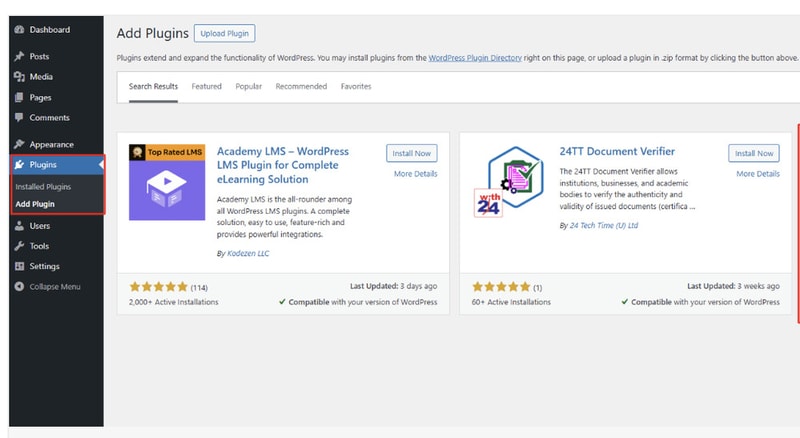
The Academic Certificate Verification plugin for WordPress is a tool designed to streamline the management and validation of educational credentials. It enables institutions, online academies, and training centers to securely issue, track, and verify certificates directly through their WordPress websites.
By automating verification processes, the plugin can reduce administrative overhead and enhance trust between issuers and recipients. Its features typically include certificate generation, unique verification codes, and real-time validation checks, helping organizations maintain integrity in credential management. For education providers, professional training centers, or corporate learning programs, such tools can simplify compliance and ensure that certificates are authentic and tamper-proof. Additionally, the plugin’s integration with WordPress allows for ease of deployment and management without requiring extensive technical resources, making it a practical solution for digital credential verification at scale.
Image Credit: Academic Certificate Verification
Key Themes Behind This Trend
- Embedded Credential Verification
- Verification systems built into content management platforms allow institutions to present live credential status alongside digital profiles, reducing reliance on external validation channels.
- Tamper-proof Certificate Generation
- Cryptographically signed and uniquely coded certificates create immutable records that significantly raise the technical bar for fraudulent credential replication.
- Low-code Verification Integrations
- Plug-in architectures that require minimal technical overhead enable rapid deployment of verification workflows across varied organizational contexts, widening access to secure credentialing.
Where This Applies
- Higher Education
- Universities and colleges stand to see credential issuance and alumni verification become more transparent and auditable, altering transcript and credential workflows.
- Corporate Training and L&D
- Workplace learning programs can incorporate verifiable micro-credentials into talent pipelines, changing how skill attainment is recorded and trusted by employers.
- Professional Certification Bodies
- Licensing organizations could shift toward real-time credential verification as a core service, impacting renewal, compliance monitoring, and public trust mechanisms.