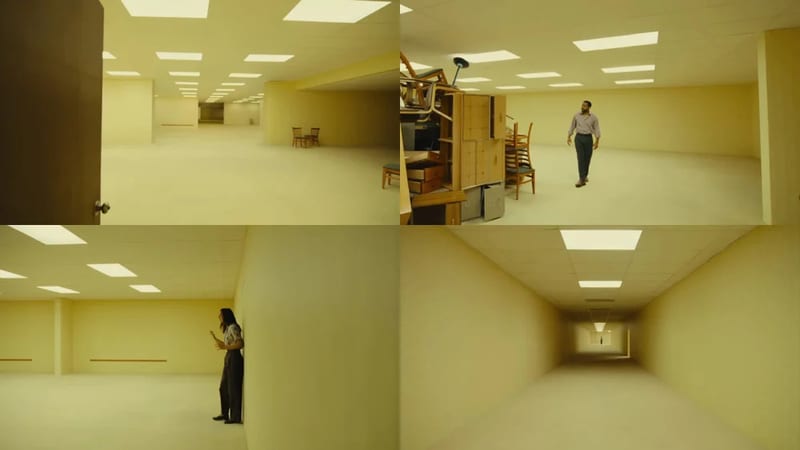
The A24 Backrooms film introduces a large-scale physical set designed to replicate the unsettling logic of liminal space environments. The A24 Backrooms film includes over 30,000 square feet of constructed interiors, forming a continuous network of corridors, rooms, and transitional zones built for on-set filming. Director Kane Parsons translated the aesthetic from his digital work into physical architecture, using repeated layouts, low ceilings, and fluorescent lighting to create disorienting spatial conditions.
The set design follows a strict internal structure where rooms repeat, shift, and connect through controlled architectural patterns. These spaces are defined by absence, with minimal objects and no clear function, aligning with the visual language of liminal environments. Reports from production note that the scale and layout caused crew members to lose their sense of direction while navigating the set.
Image Credit: A24
Why This Trend Is Growing
- Physical Recreation of Digital Aesthetics
- The material translation of internet-born visuals into built sets creates tangible environments that extend digital subcultures into real-world experiences.
- Scale-driven Immersive Environments
- Extensive continuous sets spanning tens of thousands of square feet enable prolonged sensory immersion and sustained narrative disorientation.
- Controlled Architectural Ambiguity
- Repetitive layouts, low ceilings, and minimal furnishing produce intentional spatial uncertainty that alters perception and movement within a space.
Industries Being Reshaped
- Film and Television Production
- Large-scale fabricated environments redefine production design economics and offer new formats for location-centric storytelling and prolonged on-set performances.
- Immersive Entertainment and Theme Parks
- Liminal architectural principles present new attraction types that emphasize cognitive challenge and atmospheric immersion over traditional ride mechanics.
- Architecture and Interior Design
- The aesthetic of purposeful non-functionality introduces prototype spaces for experimental retail, hospitality, and therapeutic environments that prioritize mood and ambiguity.