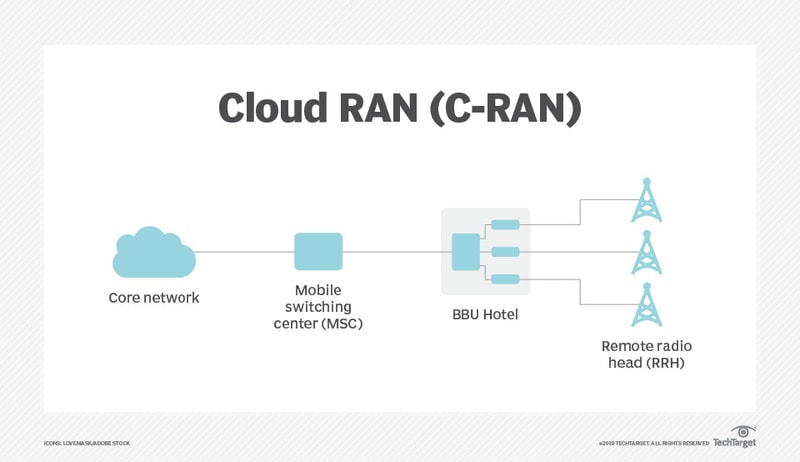
AT&T completed a Cloud RAN trial with Ericsson and Intel that demonstrated AI-driven radio access functions, featuring AI-native link adaptation that adjusts transmission in real time. The evaluation ran Ericsson RAN software on Intel Xeon 6 system-on-a-chip hardware and used commercial off-the-shelf servers rather than proprietary radio equipment.
The setup tested machine learning models across varying radio frequencies to read channel conditions and interference, with Intel providing silicon optimised for ML workloads. Ericsson supplied a hardware-agnostic RAN software stack that separated software from physical infrastructure, enabling portability and faster feature deployment.
For operators, the trial showed up to 20% throughput gains and improved spectral efficiency, illustrating how open, cloud-based architectures enable networks to apply AI where it yields the greatest return. The move toward decoupled software and commodity hardware supports faster innovation cycles and reduces vendor lock-in for mobile carriers.
Image Credit: AT&T
Key Themes Behind This Trend
- AI-native Link Adaptation
- Real-time ML-driven link adaptation can enable dynamic spectrum sharing and per-user throughput optimization that upends traditional static scheduling.
- Cloud-native RAN
- Cloud-native RAN architectures promise modular feature deployment and multi-vendor interoperability that could displace proprietary baseband solutions.
- Hardware-software Decoupling
- Separable RAN software from commodity silicon creates a market for platform-agnostic RAN stacks and third-party value-added services disrupting integrated vendor ecosystems.
Where This Applies
- Telecom Operators
- Operators stand to realize cost-efficient capacity scaling and differentiated service tiers through AI-driven throughput gains and vendor-agnostic deployments.
- Semiconductor Providers
- Silicon optimized for ML workloads may shift demand toward general-purpose server chips and specialized accelerators over legacy baseband ASICs.
- Enterprise Edge Cloud Services
- Edge cloud providers could host RAN functions on COTS servers to offer low-latency connectivity and new managed network services competing with traditional carriers.