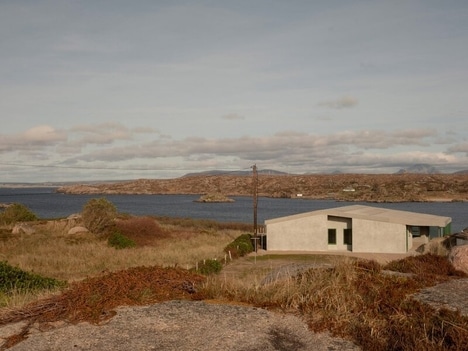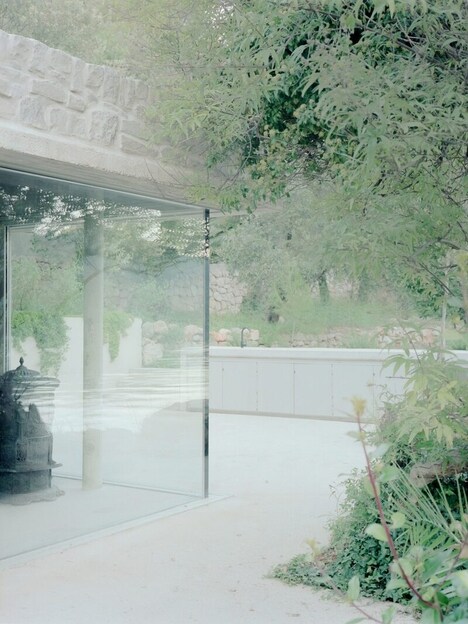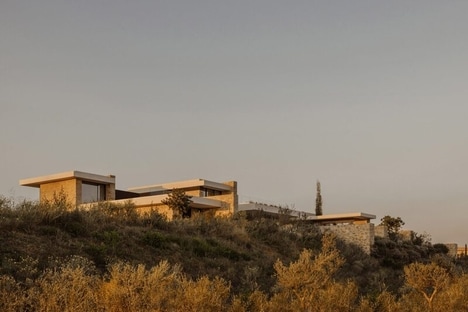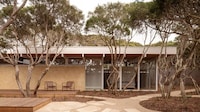
ARP - Architecture Research Practice has thoughtfully reimagined a 1980s beach house on Antiparos, Greece. The project effectively demonstrates how sensitive renovation can honor historical context while adapting to contemporary living.
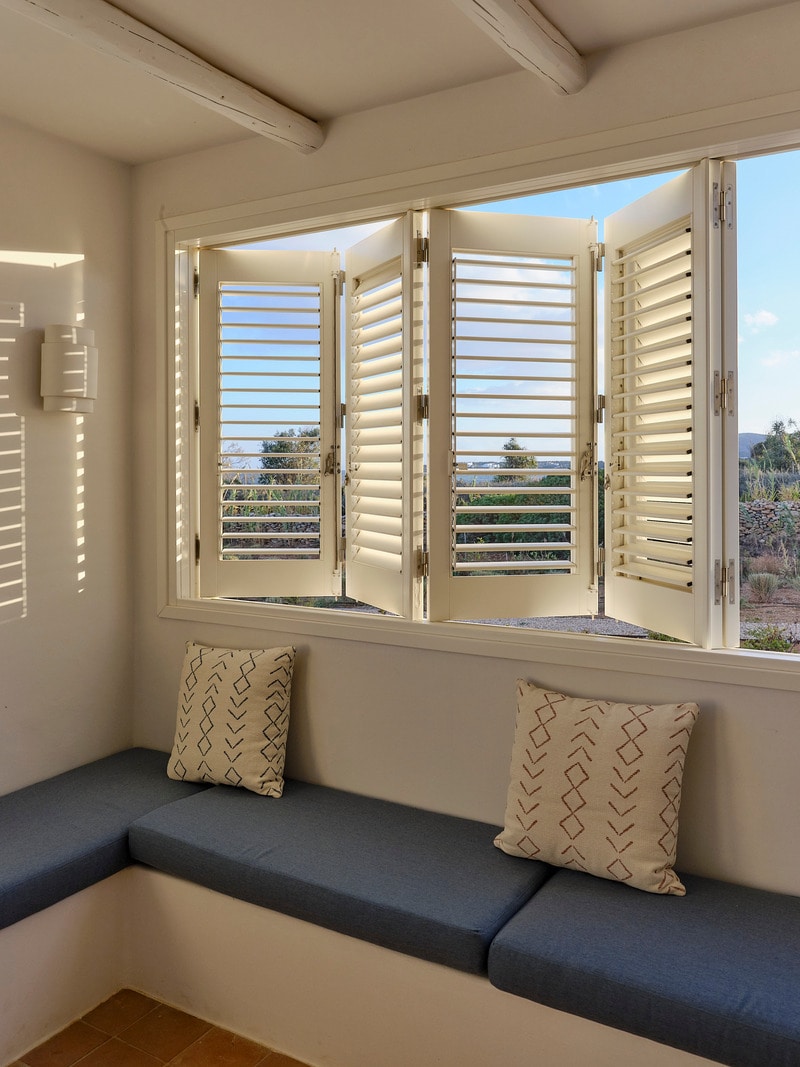
Situated near the Byzantine church of Agia Kyriaki, the rejuvenated 1980s beach house navigates strict preservation regulations by retaining the original structure's footprint. Material updates — such as locally sourced Naxian marble and ceramic tiles echoing archaeological finds — bridge past and present, creating a tactile connection to the island's heritage. The layout prioritizes effortless coastal living, with three compact rooms flowing into a versatile semi-open space framed by movable white shutters. This central area becomes a natural gathering point as it embodies the Mediterranean tradition of outdoor living and allows occupants to modulate light and sea breezes.
Minimal landscaping interventions, including a vegetable garden and recreational space, complement rather than compete with the rugged seaside setting.
Image Credit: Giulio Ghirardi
Why This Trend Is Growing
- Sustainable Renovation
- Renovating existing structures with locally sourced materials exemplifies a sustainable approach to preserving historical integrity while meeting modern needs.
- Multifunctional Open Spaces
- Integrating semi-open spaces that can be easily adjusted to outdoor conditions reflects a trend toward flexible living that adapts to environmental changes.
- Cultural Heritage Integration
- Incorporating design elements that resonate with local history and culture offers a unique opportunity to merge traditional aesthetics with contemporary functionality.
Industries Being Reshaped
- Architecture
- Innovative architectural practices that emphasize the fusion of historical preservation with modern adaptability are reshaping the built environment.
- Sustainable Materials
- The demand for sustainable and locally sourced building materials is disrupting traditional supply chains by prioritizing environmental and cultural considerations.
- Interior Design
- Interior design that emphasizes multifunctional and culturally resonant spaces creates new opportunities for personalized and environmentally conscious living solutions.