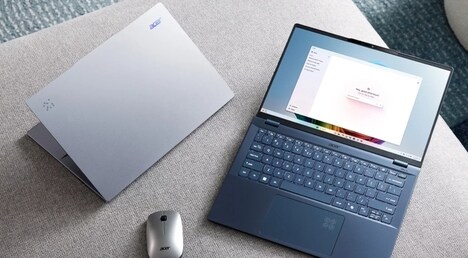
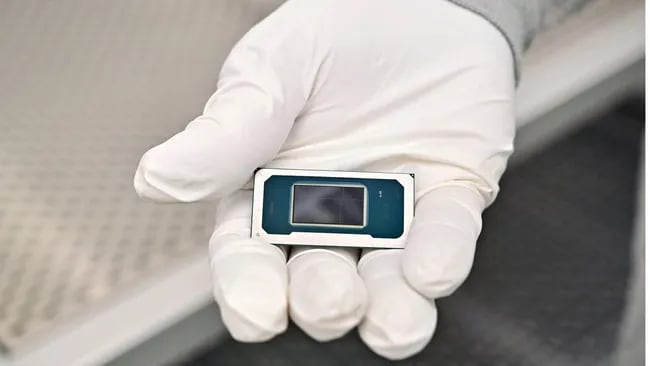
Intel introduced the 18A process node as a production-ready foundry option, the company said at the Morgan Stanley conference, with CFO Dave Zinsner noting inbound customer interest. The node debuted as part of Intel's Panther Lake laptop CPU lineup, featuring refinements that moved it from an internal-only node toward external availability.
Executives clarified the Intel–Nvidia collaborations were product-focused, but Intel indicated 18A could be offered to outside customers rather than reserved solely for in-house chips. The change expands Intel Foundry Services' roadmap and complements the still-in-development 14A node, giving customers access to a shipping advanced node.
For OEMs and chip designers this matters because it widens options for pairing x86 CPUs with high-performance silicon and accelerates time-to-market by leveraging a node already in production. Offering 18A to customers signals foundry competitiveness and supports ecosystem momentum around heterogeneous compute pairings.
Image Credit: Intel
What Makes This Trend Stand Out
- Foundry Commercialization of Advanced Nodes
- Expanded external availability of 18A creates potential for foundries to monetize leading-edge nodes through customer-facing service offerings that reshape supply dynamics.
- Heterogeneous Compute Pairings
- Widening options to pair x86 CPUs with high-performance accelerators on a common advanced node opens avenues for differentiated multi-die and chiplet architectures.
- Production-ready Node Acceleration
- Availability of a shipping 18A node shortens qualification cycles and enables new product strategies that capitalize on proven process maturity rather than speculative future nodes.
Sectors Adopting This
- Semiconductor Foundries
- Greater demand from external customers for 18A positions foundries to evolve pricing, capacity and IP licensing models around elite process technologies.
- OEM Laptop and PC Manufacturers
- OEMs gain access to pre-production-validated silicon options that can support thinner, higher-performance systems with integrated heterogeneous components.
- Accelerator and GPU Designers
- GPU and accelerator teams face opportunities to optimize power, performance and integration by targeting a widely available advanced node already proven in shipping products.